B.Sc in Radiology and Imaging Technology
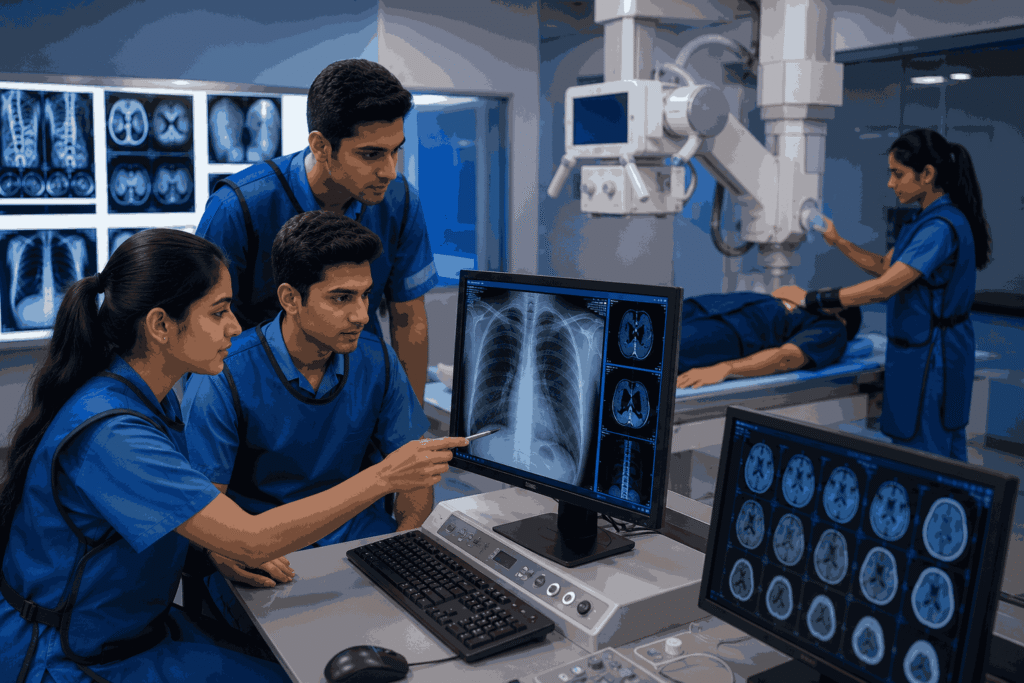
One X-ray or MRI scan can reveal a fracture, a tumour, an internal injury, or even the earliest signs of disease before symptoms become serious. Behind every one of those images stands a trained radiology professional.
That’s exactly where a career in B.Sc Radiology and Imaging Technology begins.
What is Radiology and Imaging Technology?
Radiology and Imaging Technology is a healthcare field focused on creating diagnostic images of the human body using advanced medical equipment. These images help doctors identify diseases, injuries, infections, and abnormalities accurately.
Students in the B.Sc Radiology and Imaging Technology program learn how to operate imaging equipment such as:
- X-ray machines
- CT scan systems
- MRI scanners
- Ultrasound devices
- Mammography systems
Difference Between Radiology & Medical Imaging
Radiology is the broader medical speciality, where radiologists interpret diagnostic images and provide medical conclusions. Medical Imaging Technology focuses more on the technical and operational side, where trained imaging technologists capture high-quality scans and ensure patient safety.
Ready to Shape Your Future? Apply Now.
Engineering, Design, Commerce, Law, Science & more. Join a university built for the future.
Importance & Scope in the Healthcare Industry
Modern healthcare simply cannot function without diagnostic imaging. From emergency trauma cases to cancer detection and prenatal care, imaging technology plays a critical role in almost every medical department.
Hospitals, diagnostic centres, trauma units, multispeciality clinics and research institutions all require skilled imaging professionals. As healthcare infrastructure expands across India, the demand for trained radiology technologists keeps growing steadily.
This makes B.Sc Radiology and Imaging Technology jobs highly relevant in today’s healthcare sector.
Future Trends & Demand in India
Healthcare technology in India is evolving quickly. AI-assisted imaging, digital radiography, portable scanning systems and advanced MRI technologies are transforming diagnostics.
What does this mean for students?
More opportunities. Better specialisation options. Stronger career growth.
India’s diagnostic industry is expanding rapidly due to:
- Growing healthcare awareness
- Rise in lifestyle diseases
- Increased medical insurance access
- Expansion of private hospitals
- Growth of diagnostic chains in Tier-2 and Tier-3 cities
Key Skills You Will Gain after B.Sc in Radiology and Imaging Technology
A strong radiology professional combines technical precision with patient care skills. During the program, students develop competencies that healthcare employers actively seek.
Some of the major skills include:
- Diagnostic imaging techniques
- Radiation safety practices
- Patient positioning methods
- Equipment handling and maintenance
- Clinical communication
- Medical ethics and healthcare protocols
- Critical observation and reporting support
At Sigma University, learning combines classroom understanding with hands-on application, helping students gain confidence in real clinical settings.
Diagnostic Tools, Image Analysis & Reporting Skills
Students are trained to work with multiple diagnostic systems while understanding image quality assessment and preliminary technical reporting procedures.
The course also helps students understand:
- Image clarity and positioning
- Contrast optimisation
- Scan preparation protocols
- Radiation dosage management
- Digital image processing systems
These practical competencies become essential during internships and hospital postings.
Eligibility Criteria & Admission for B.Sc Radiology and Imaging Technology
Students who have completed 10+2 with Physics, Chemistry, and Biology from a recognised board are eligible for admission.
Entrance Exams and Application Process
Admission may be based on:
- Merit in qualifying examinations.
- University admission criteria.
- Applicable entrance examinations, if required.
The typical application process includes:
- Filling out the online application form
- Submission of academic documents
- Application verification
- Admission confirmation
Students are encouraged to apply early to secure their seats.
Curriculum & Semester Subjects
The B.Sc Radiology and Imaging Technology syllabus is carefully structured to balance theoretical learning and practical training.
Core subjects generally include:
- Human Anatomy
- Human Physiology
- Radiation Physics
- Radiographic Techniques
- Pathology
- Medical Imaging Technology
- CT Scan Technology
- MRI Technology
- Ultrasound Imaging
- Radiation Protection
The curriculum gradually progresses from foundational sciences to advanced imaging techniques and clinical applications.
Clinical Rotations & Laboratory Training
This is where the real transformation happens.
Students spend significant time in practical laboratories and clinical environments where they observe and participate in imaging procedures under professional supervision.
At Sigma University, practical learning remains a major focus because healthcare careers demand real-world confidence, not just theoretical scores.
Electives or Advanced Imaging Modules
Depending on the curriculum structure, students may also explore advanced areas such as:
- Interventional imaging
- Advanced CT protocols
- MRI specialisations
- Diagnostic sonography
- Digital radiography systems
These specialised modules help students align their careers with advanced healthcare technologies.
Internship & Clinical Exposure Opportunities after B.Sc Radiology and Imaging Technology
Clinical exposure is one of the most valuable parts of the program.
Internships allow students to work directly in hospitals, diagnostic centres and healthcare facilities, where they gain practical experience with imaging equipment and patient handling.
This experience often improves employability and helps students transition smoothly into professional healthcare environments.
Career Opportunities & Salary Trends
Healthcare diagnostics continues to be one of the most stable career sectors in India.
Graduates can explore opportunities in:
- Government hospitals
- Private hospitals
- Diagnostic laboratories
- Imaging centres
- Trauma care units
- Research facilities
- Healthcare equipment companies
The salary for fresh graduates depends on skill level, specialisation, location, and organisation type. With experience and certifications, professionals can move into senior imaging roles and specialisation-based positions.
Top Job Roles in Radiology & Imaging
Popular B.Sc Radiology and Imaging Technology jobs include:
- Radiology Technologist
- MRI Technician
- CT Scan Technician
- X-Ray Technician
- Imaging Technologist
- Ultrasound Assistant
- Diagnostic Imaging Executive
- Radiology Department Supervisor
Many graduates also pursue higher education and advanced certifications for career growth.
Why Choose This B.Sc Program at Sigma University?
Choosing a healthcare course is a big decision. The environment you study in matters just as much as the syllabus.
At Sigma University, students benefit from:
- A 26.7 lakh sq. ft. modern campus.
- Industry-oriented learning approach.
- Advanced laboratory infrastructure.
- Experienced faculty support.
- Practical clinical exposure.
- Strong placement assistance.
The university has also built an active placement ecosystem, with 250+ recruiters, and over 10,000+ placements across disciplines.
Learning here feels connected to real healthcare practice. That makes a difference.
FAQ
The scope is strong and growing, due to increasing demand for diagnostic imaging services in hospitals and healthcare centres across India.
The B.Sc Radiology and Imaging Technology syllabus usually includes anatomy, physiology, radiation physics, imaging techniques, CT technology, MRI technology, pathology and clinical training.
Graduates can work as MRI technicians, CT scan technologists, radiology technicians, imaging technologists and diagnostic imaging professionals in hospitals and diagnostic centres.
Yes, clinical internship and practical training are important components of the program, because students need real-world hospital exposure before entering professional healthcare practice.
Leading Companies Hiring from Our School
Leading companies hire our graduates for their industry-ready skills, strong academics, and hands-on experience.
Highest Salary Package
Recruiters
Placements
Research Paper
Our Placement Partners
At Sigma, we shape global careers with proven worldwide placements.



















Structured classroom sessions and personal interaction with faculty
Structured classroom sessions and personal interaction with faculty
Structured classroom sessions and personal interaction with faculty
Structured classroom sessions and personal interaction with faculty
Academic and Campus Facilities
At Sigma University, our campus pulses with the
vibrancy of tech-savvy students who exude an
infectious enthusiasm for innovation and technology.
Personalities at Sigma
Writer and Orator

Motivational Speaker

Spokesperson

Consulate General, Republic of Indonesia,
Blogs

B.Tech Mechanical Engineering: Core Companies vs IT Companies for Career

IoT (Internet of Things) Engineering: Emerging Career Opportunities in India

How to Get an Education Loan for a Private University in India: Complete Process

Civil Engineering in India: Government Job Opportunities After B.Tech

How to Become a DevOps Engineer: Skills Every Computer Science Graduate Needs

BCA vs B.Tech CSE: Salary Comparison After 5 Years in India

B.Tech CSE vs B.Tech IT: Which Engineering Branch Has Better Job Prospects?
