Diploma in Electrical Engineering
Start your technical career with an AICTE-approved Diploma in Electrical Engineering at Sigma University. This three-year program blends classroom knowledge with practical training, preparing students for the fast-growing power, manufacturing, IT, and energy sectors.
Practical Learning
With state-of-the-art labs and experienced faculty, students gain the practical knowledge and technical skills required by today's electrical industry.
Career Ready
Strong placement support makes the course ideal for students aspiring to build a successful career in electrical engineering.

Why Choose a Diploma in Electrical Engineering at Sigma University?
The Diploma in Electrical Engineering at Sigma University focuses on strong academic learning with practical industry exposure.
Students gain hands-on experience in well-equipped labs along with internships, industrial visits, and project-based learning.
The program also includes career guidance and skill development to prepare students for jobs in power generation, manufacturing, automation, renewable energy, and electrical maintenance.
Located in Gujarat, the university is known for its industry-oriented training, modern infrastructure, and focus on producing job-ready electrical engineering professionals.
Sigma University is recognized among Gujarat’s leading engineering institutions, offering industry-aligned diploma programs.
Its Diploma in Electrical Engineering stands out for modern teaching methods, placement support, and a comprehensive curriculum, ensuring graduates are well-prepared to enter competitive industries with confidence.
The diploma program emphasises experiential learning through workshops, labs, and real-world projects.
Subjects are designed in collaboration with industry experts, ensuring students gain knowledge in electrical circuits, power systems, and electronics while developing the problem-solving and analytical skills required by employers.
Sigma provides students with modern labs equipped with the latest technologies.
Expert faculty guide students through core subjects and practical training, while the placement cell ensures career support, internships, and industry tie-ups that bridge the gap between academics and employment opportunities.
Sigma University
AICTE, New Delhi & UGC, New Delhi
03 Years
Candidate shall have passed SSC examination with subjects Basic Mathematics / Standard Mathematics, Science, English.
OR
Std: 10+ Two years ITI course from govt. recognized University
As per the directives of Admission Committee. Usually from May to October every year.
Visit: https://admissions.sigmauniversity.ac.in/
Call: +91 7567176000
July 2025
Sigma Institute of Engineering, Sigma University Vadodara.
10: 00 am to 05:00 pm
60
Curriculum
| Sem | Course Code | Course Name | Theory (T) | Tutorial (T) | Practical (P) | Hrs | Credit | Detail Syllabus |
|---|---|---|---|---|---|---|---|---|
I |
1DBM01 |
Basic Mathematics |
3 |
0 |
0 |
3 |
3 | |
I |
1DME01 |
Engineering Graphics |
1 |
0 |
4 |
5 |
3 | |
I |
1DCL01 |
Engineering Mechanics |
3 |
0 |
2 |
5 |
4 | |
I |
2DCL02 |
Basics of Civil Engineering |
3 |
0 |
2 |
5 |
4 | |
I |
1DME02 |
Engineering Workshop |
2 |
0 |
4 |
6 |
4 | |
I |
1DCS01 |
Basic Communication Skills |
2 |
0 |
0 |
2 |
2 | |
I |
1DOA01 |
Office Applications |
0 |
0 |
4 |
4 |
2 | |
I |
1NCC01/1NSS01/1SPO01 |
NCC/NSS/Sports |
0 |
0 |
2 |
2 |
0 | |
14 |
0 |
18 |
32 |
22 |
About the Electrical Engineering Diploma Course at Sigma University
The program is structured as a full-time three-year diploma with a semester-based academic plan.
It offers a balanced mix of theory and practical modules, preparing students to handle diverse challenges in power generation, distribution, automation, and electronics.
Approved by AICTE & UGC
Sigma University’s diploma program is approved by AICTE and UGC, ensuring nationwide recognition and academic credibility.
This recognition supports eligibility for government job opportunities, higher education pathways, education loan applications and recruitment processes in various public and private sector organisations.
Choice-Based Credit System (CBCS) with Flexible Learning
The course follows the Choice-Based Credit System (CBCS), offering flexibility to select elective subjects aligned with career goals.
Students can customize their learning experience while strengthening knowledge in electrical engineering fundamentals and specialized areas.
Key Highlights of the Program
| Feature | Details |
|---|---|
| Course Name | Diploma in Electrical Engineering |
| Course Level | Diploma |
| Duration | 3 Years |
| Eligibility | 10th Pass from a Recognised Board |
| Learning Areas | Electrical Circuits, Power Systems, Electrical Machines, Electronics |
| Practical Training | Workshops, Laboratories, Projects, Industrial Exposure |
| Industry Exposure | Internships, Industrial Visits, Technical Training |
| Emerging Areas | Automation, Renewable Energy, Electrical Control Systems |
| Career Opportunities | Electrical Technician, Maintenance Engineer, Power Plant Technician, Supervisor |
| Higher Education Options | Lateral Entry to B.Tech in Electrical Engineering |
| Career Support | Placement Assistance, Skill Development, Career Guidance |
Practical Learning with State-of-the-Art Electrical Labs
Sigma University provides access to well-equipped electrical labs with advanced tools for circuit design, machine testing, and simulation. Students actively engage in experiments, enhancing their technical understanding and practical expertise.
Updated Syllabus Covering Power Systems, Machines & Circuits
The curriculum is frequently updated to reflect advancements in electrical technology. Students learn about power systems, electrical machines, electronic devices, control systems, and renewable energy solutions, ensuring relevance to modern industry needs.
Internships, Industry Visits & Project-Based Learning
Students participate in industry visits and internships that provide exposure to real-world applications of electrical engineering. Through practical training, they gain insights into power systems, industrial automation, electrical maintenance, EV charging systems and emerging hybrid technologies. Final-year project work encourages innovation and teamwork, helping students apply theoretical concepts to solve practical engineering problems.
Diploma in Electrical Engineering Syllabus & Subjects - Semester-Wise Breakdown
Semester-Wise Syllabus
The Diploma in Electrical Engineering syllabus is structured across Semesters 1 to 6.
Semester 1-2
Focus on engineering fundamentals, basic science concepts, electrical basics and communication skills to build a strong foundation.
Semester 3-4
Covers core electrical engineering areas, with increased lab work; introducing students to machines, circuits, measurement systems and control basics.
Semester 5
Focus shifts to applied learning, industrial exposure, automation basics and hands-on training through internships or fieldwork.
Semester 6
The final semester is project-based, where students apply their learning to real-world engineering problems and prepare for jobs or higher studies.
Core Electrical Engineering Diploma Subjects
The core subjects in a diploma in electrical engineering include electrical circuits, DC and AC machines, power generation and distribution, electronics, microcontrollers, and industrial automation. These are essential for building a strong technical base.
Electives & Practical Modules for Industry Readiness
Electives allow students to specialise in areas such as IoT (Internet of Things), Renewable Energy, PLC/SCADA systems, EV Technology, Smart Grid Systems, Power Electronics and Control Systems.
Practical modules ensure industry readiness by emphasising laboratory work, simulation exercises, and application-based learning.
Final Year Projects & Internship Opportunities
In the final year, students undertake major projects and internships.
These experiences strengthen problem-solving, project management, and teamwork skills, making students job-ready for both public and private sector roles.
Eligibility & Admission 2026
The diploma in electrical engineering after 10th is open to students with science and mathematics.
Students who have completed 12th with science or math are also eligible to apply.
Direct Admission & Lateral Entry Options Available
Application Process: Online Registration & Document Verification
Admission involves online registration through the Sigma University portal, followed by submission of required documents for verification.
Selection is merit-based, ensuring fair opportunities for all applicants.
Fees, Scholarships & Financial Support
➞ Fee Structure
The diploma in electrical engineering fees at Sigma University are structured to remain affordable while ensuring access to high-quality education.
➞ Scholarships for Merit & Reserved Categories
Merit-based scholarships are available for top-performing students, while reserved categories offer financial aid to promote inclusivity.
Students may also explore government-supported scholarship programs, such as the MYSY (Mukhyamantri Yuva Swavalamban Yojana) scheme, and other merit-based scholarship opportunities, subject to eligibility criteria and applicable guidelines.
These initiatives help make quality technical education more accessible and affordable.
➞ Education Loan & Easy EMI Payment Options
Career Scope After Diploma in Electrical Engineering
| Job Role | Average Starting Salary* |
|---|---|
| Electrical Technician | ₹2.5 - 4.5 LPA |
| Electrical Maintenance Technician | ₹2.5 - 5 LPA |
| Power Plant Technician | ₹3 - 5.5 LPA |
| Electrical Supervisor | ₹3 - 6 LPA |
| Control Panel Technician | ₹2.5 - 4.5 LPA |
| Industrial Automation Technician | ₹3 - 6 LPA |
| PLC/SCADA Technician | ₹3.5 - 6.5 LPA |
| Renewable Energy Technician | ₹3 - 5.5 LPA |
| EV Charging Infrastructure Technician | ₹3 - 6 LPA |
| Field Service Engineer | ₹3 - 5.5 LPA |
Salary ranges are approximate and may vary based on skills, certifications, location, employer, and industry sector.
Career Scope in Power Plants, Manufacturing, Automation & Renewable Energy Industries
Higher Studies After Diploma in Electrical Engineering
Top Recruiters & Placement Support
Sigma University provides dedicated placement support for electrical engineering diploma students through career guidance, aptitude training, interview preparation, and industry interaction programs.
With a network of 250+ recruiters across engineering, manufacturing, automation, energy, and infrastructure sectors, graduates can explore diverse career opportunities.
Placement outcomes may vary based on student performance, skills, industry demand, and recruitment requirements.
Companies Hiring Diploma Electrical Engineering Graduates
Top recruiters include companies in the energy, manufacturing, IT, and infrastructure sectors. Organisations like Siemens, ABB, L&T, NTPC, Tata Power, Havells, PGVCL, BHEL and Adani hire diploma holders for technical roles.
Placement Training, Resume Building & Mock Interviews
Internships with Leading Industries & Career Guidance
Faculty & Infrastructure at Sigma University
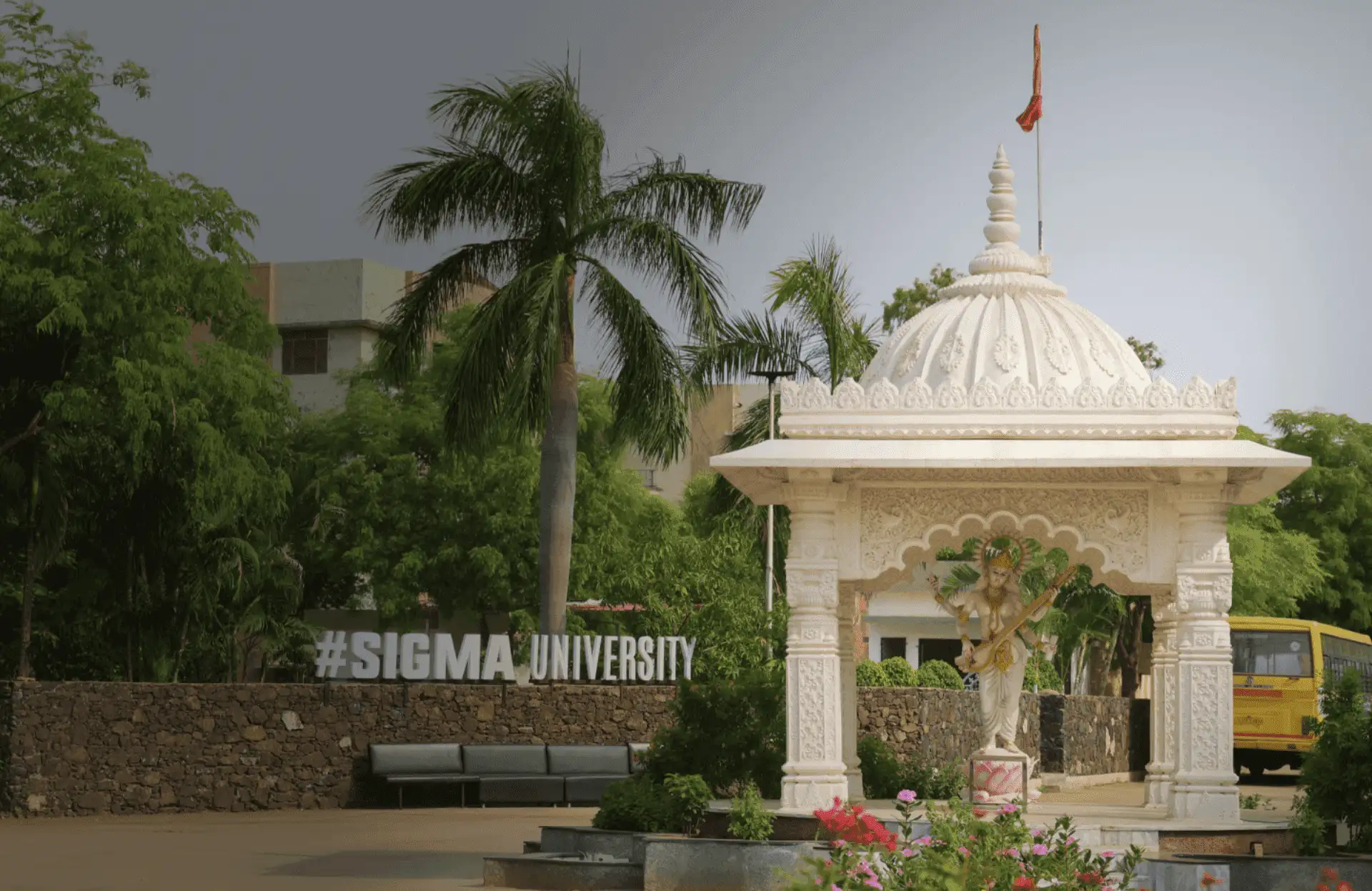
Sigma University, Vadodara, offers a supportive learning environment backed by experienced faculty members and modern infrastructure.
Experienced Faculty with Industry & Research Expertise
Sigma University’s faculty members bring a blend of academic qualifications, research expertise, and industry experience to the classroom, ensuring students gain practical insights along with theoretical knowledge.
Fully Equipped Electrical Labs & Simulation Tools
The university offers a power systems lab, ETAP, MATLAB, control systems lab, PLC setup, simulation tools and advanced equipment in labs for testing machines, designing circuits, and practising control systems.
Campus Facilities: Hostel, Library, Wi-Fi & Sports
Students enjoy a holistic environment with modern hostels, digital library access, campus-wide Wi-Fi, and sports facilities for all-around development.
Diploma in Electrical Engineering vs ITI Electrician Course – Which Is Better?
Both a Diploma in Electrical Engineering and an ITI Electrician course can lead to rewarding careers, but they serve different purposes.
| Parameter | Diploma in Electrical Engineering | ITI Electrician Course |
|---|---|---|
| Course Duration | 3 Years | 1-2 Years |
| Eligibility | 10th Pass | 10th Pass |
| Learning Focus | Electrical Engineering Concepts, Power Systems, Automation | Electrical Installation and Maintenance |
| Career Level | Technician, Supervisor, Junior Engineer Roles | Electrician and Technical Support Roles |
| Higher Education | Lateral Entry to B.Tech Available | Limited Direct Engineering Pathways |
| Career Growth | Higher Long-Term Growth Potential | Faster Entry into Workforce |
| Industry Exposure | Labs, Projects, Internships | Practical Trade Training |
Government Job Opportunities After an Electrical Engineering Diploma
Popular government employment opportunities include:
- Indian Railways
- State Electricity Boards
- Power Distribution Companies
- Public Works Departments (PWD)
- Municipal Corporations
- NTPC
- BHEL
- ONGC
- DRDO
- ISRO
- Metro Rail Projects
- Government Power Plants
Emerging Technologies in the Electrical Engineering Diploma Curriculum
Key emerging technologies include:
- Smart Grid Systems
- Renewable Energy Technologies
- Solar and Wind Power Systems
- Electric Vehicle (EV) Technology
- EV Charging Infrastructure
- Industrial Automation
- PLC and SCADA Systems
- Internet of Things (IoT)
- Smart Energy Management Systems
- Energy Storage Technologies
Exposure to these emerging technologies helps students develop industry-relevant skills, and prepares them for future opportunities in automation, renewable energy, smart infrastructure and advanced electrical systems.
Student Life at Sigma University
Students participate in clubs such as robotics and IEEE societies, enhancing creativity and technical innovation.
Workshops, Tech Fests & Industry Expert Sessions
Sigma organizes workshops, technical fests, and sessions by industry experts, providing exposure beyond classroom learning.
Vibrant Campus Life with Cultural & Sports Activities
Cultural festivals, debates, and sporting events ensure students enjoy a vibrant campus life.
Diploma in Electrical Engineering - FAQs
Both options are suitable. Pursuing a diploma in electrical engineering after 10th allows students to start their careers earlier, while completing it after 12th provides stronger academic maturity. The choice depends on whether students wish to enter the workforce early or continue higher education.
The average starting salary for diploma holders ranges from ₹2.5 to ₹4.5 lakhs annually, depending on job role, location, and recruiter. With experience, advanced certifications, and higher studies, salary potential increases significantly, especially in specialised industries like power, automation, and renewable energy.
Yes, many government organisations and PSUs recruit diploma electrical engineering graduates. Opportunities exist in railways, state electricity boards, and public infrastructure projects. Roles include junior engineer, electrical supervisor, and technician, offering stable career growth and benefits associated with government jobs.
Students can pursue B.Tech or BE through lateral entry into the second year. Postgraduate options like M.Tech or MBA open doors to managerial and research roles. Specialised certifications in automation, robotics, or renewable energy enhance career prospects further.
No, Sigma University offers direct admission to eligible candidates. Admission is based on merit, requiring completion of 10th with science and mathematics or 12th with relevant subjects. Lateral entry options are available for ITI graduates and vocational students.
An ITI course focuses on skill-based technical training, usually shorter in duration, preparing students for technician-level jobs. A diploma in electrical engineering offers broader academic and practical knowledge over three years, enabling graduates to pursue higher education and more advanced technical roles.
Students gain practical skills in electrical circuit design, power system analysis, machine operations, and industrial automation. Training in simulation tools, project management, and renewable energy applications ensures students are well-prepared for industry challenges.
The fee may vary by admission year. Contact Sigma University directly for the latest Diploma in Electrical Engineering fee details.
Electrical diploma graduates can pursue careers in power, automation, renewable energy, EV technology, manufacturing, and government sectors.
Sigma University is a popular choice in Gujarat, offering industry-focused learning, practical training, internships, and placement support.
Leading Companies Hiring from Our School
Leading companies hire our graduates for their industry-ready skills, strong academics, and hands-on experience.
Highest Salary Package
Recruiters
Placements
Research Paper
Our Placement Partners
At Sigma, we shape global careers with proven worldwide placements.