Faculty of Hospitality and Tourism

Hotel Management Course in Vadodara | Admission 2026 Guide

Hotel Management Course in Vadodara: How to Choose the Right College (2026 Guide)

Index Why Your Choice of College Matters Key Parameters to Consider Before You Enrol Know Your Goal Before Choosing If You Want to Become a Chef Diploma in Hotel Management Admission 2026 – What You Should Know What Makes FHT Sigma University a Strong Choice Your Next Steps Final Thoughts FAQs Why Your Choice of College Matters Every year, many students dream of building a career in hotels, airlines, cruise lines, and the tourism industry.  But a common mistake most students make is choosing a college without fully understanding what actually shapes their career. As a Placement Coordinator at the Faculty of Hospitality & Tourism (FHT), I often hear:“Which hotel management course is best for my future?” The answer isn’t about picking the most popular institute—it’s about choosing a program that aligns with your career goals, learning style, and long-term vision. Whether you aim to become a chef, work in luxury hotels, join aviation, or start your own café, your foundation matters. Key Parameters to Consider Before You Enrol 1. Academics & Course Structure The curriculum is the backbone of your learning. A well-designed hospitality program should include: Food production and culinary skills Food & beverage service Front office operations Housekeeping Business communication and basics of management Just as important is practical exposure. Hospitality is a hands-on field—so your learning should go beyond classrooms. At FHT, Sigma University, programs like the Diploma in Hotel & Tourism Management (DHTM) combine theory with practical training and business-oriented subjects, helping students understand both operations and management. 2. Affiliations & Academic Credibility Before choosing any institute, verify: University recognition Valid approvals and affiliations Structured and updated curriculum A credible academic framework ensures your qualification holds value when applying for jobs or higher studies. 3. Faculty & Industry Exposure Faculty members play a crucial role in shaping your skills and mindset. Look for institutes where: Faculty have industry experience They bring real-world case studies into teaching Students receive mentorship beyond academics Learning from professionals who have worked in real hospitality environments gives you a strong practical edge. 4. Student–Teacher Ratio In skill-based courses, personal attention matters a lot. Smaller batches help you: Get direct feedback during practical sessions Improve technical skills faster Build confidence in communication and presentation This is especially important in kitchen training, service techniques, and grooming. 5. Infrastructure & Practical Labs Your learning environment directly impacts your skill development. A good institute should have: Well-equipped training kitchens Restaurant and service labs Front office simulation setups Housekeeping practice areas At FHT Sigma University, students train in environments designed to simulate real hotel operations, making the transition to industry smoother. 6. Placements & Career Opportunities Placements are often the deciding factor—but don’t just rely on brochures. Instead: Talk to alumni on LinkedIn Connect with current students Understand internship opportunities Check the variety of recruiters A strong institute provides exposure to hotels, QSR brands, airlines, and even international opportunities. Know Your Goal Before Choosing Before applying, ask yourself: Do I enjoy working with people and service? Do I want to build a career in hotels, aviation, or tourism? Am I interested in starting my own food business? Clarity at this stage helps you choose the right program and specialization. If You Want to Become a Chef If your goal is to work in professional kitchens, focus on: 1. Culinary Training Quality Exposure to multiple cuisines Strong basics in cooking techniques Bakery and confectionery training 2. Practical Learning Hours The more time you spend in the kitchen, the better your skills. 3. Alumni Success Check if former students are working in reputed hotels or restaurants. Programs like DHTM at FHT Sigma University provide early exposure to kitchen training along with food safety, nutrition, and operational knowledge. Diploma in Hotel Management Admission 2026 – What You Should Know Program Overview Duration: 3 Years Eligibility: 10+2 from a recognised board Focus: Core hospitality skills + practical training + communication development This program is ideal for students who want to enter the industry early and build strong fundamentals. Admission Process If you’re planning for 2026 admission: Track Admission Timeline Admissions usually begin around May and continue till October. Apply Through Official Channels Use the university’s admission portal or connect with the admission team. Keep Documents Ready 10th & 12th mark sheets ID proof Passport-size photos Certificates (if any) What Makes FHT Sigma University a Strong Choice When evaluating all key factors—academics, faculty, infrastructure, and placements—FHT Sigma University offers: Industry-focused curriculum Practical training with modern facilities Internship and placement support A growing alumni network The goal is not just to help you get your first job, but to prepare you for long-term growth in the hospitality industry. Your Next Steps If you’re serious about a career in hospitality: Define your career goal clearly Shortlist a few good institutes Visit campuses and interact with students Apply early for Diploma in Hotel Management Admission 2026 FAQ 1. What is the eligibility for a diploma in hotel management? You need to complete 10+2 from a recognised board. 2. Is hotel management a good career option? Yes, it offers opportunities in hotels, airlines, cruise lines, and entrepreneurship. 3. What skills are required for hospitality careers? Communication, teamwork, adaptability, and customer service skills are essential. 4. Can I start my own business after hotel management? Yes, many students go on to start cafés, restaurants, or catering businesses. Admissions Open Dr. Srinath Achar – Faculty of Hospitality & Tourism Head of Department Share Blog: Most Popular High-Paying Degree Courses After 12th – Guide for Indian Students Top 5 Career-Focused Diploma Courses in India for 2025 LLB Course: Eligibility, Admission, Top Colleges & Fees SGPA vs CGPA Explained: Full Forms, Conversion Methods & Calculation Guide Top 6 High-Paying Career Paths After a B.Com Degree in India Diploma in Electrical Engineering: Scope, Salary, & Best Colleges MCA vs MSc Computer Science: Which Is Better? BCA Course Details: Eligibility, Fees, Syllabus, & Career Prospects Short-Term Online Courses After 12th Data Science vs. Data Analytics: Which Career Is Right

Hotel Management Course in Vadodara: How to Choose the Right College (2026 Guide) Read More »

Travel & Tourism Courses After 12th: Scope & Careers

Top Travel & Tourism Courses After 12th: Eligibility, Fees, Scope & Career Details

Index Quick Overview What Is the Travel & Tourism Industry? Why Choose Travel & Tourism Courses After 12th? Types of Travel & Tourism Courses After 12th Best Travel & Tourism Courses After 12th Travel & Tourism Course Eligibility Criteria Admission Process for Travel & Tourism Courses Entrance Exams for Travel & Tourism After 12th Top Travel & Tourism Colleges in India Travel & Tourism Course Fees Career Opportunities After Travel & Tourism Courses Salary After Travel & Tourism Courses International Career Scope in Travel & Tourism Travel & Tourism vs Hospitality vs Aviation Is Travel & Tourism the Right Career After 12th? Common Mistakes Students Make While Choosing Tourism FAQs Why Choose Sigma University for Travel & Tourism Courses? Conclusion Quick Overview The travel and tourism industry in India is steadily growing due to increasing domestic and international travel, creating strong job opportunities. The field includes tour planning, ticketing, hotels, transport services, cruise management, and destination management. After 12th, students can choose from diploma, degree, BBA, B.Sc., or short-term certificate courses based on their career goals. Students from Arts, Commerce, or Science streams with 45–50% marks in Class 12 are generally eligible; admissions may be merit-based or through entrance exams/interviews. Diploma course fees typically range from INR 30,000 to INR 1 lakh per year, while degree programmes may range from INR 60,000 to INR 2.5 lakh per year. Career options include travel consultant, tour manager, ticketing officer, and destination executive, with starting salaries around INR 5 lakhs per year and higher pay in managerial or international roles. The field suits organised, people-friendly students who enjoy dynamic work environments and offer long-term growth opportunities in India and abroad. Many students look for a career that feels exciting and meaningful post Class 12. Some want stability, while others want variety and growth.  If meeting new people and learning about different places and cultures interests you, travel and tourism courses are a great opportunity for you. The tourism industry in India has grown steadily over the past decade. Domestic travel is increasing. International travel is also expanding.  As more people travel for leisure and business, the demand for trained professionals continues to rise. What Is the Travel & Tourism Industry? The travel and tourism industry covers tour planning, ticket booking, hotels, transport, cruise services, and destination management.  A travel and tourism course is a programme that teaches students how to manage travel services professionally. You learn how trips are planned, how travel businesses operate, and how to handle customers. Why Choose Travel & Tourism Courses After 12th? This field is not limited to one type of job. You may work in an office, at an airport, or even at tourist destinations.  The variety keeps the work interesting and helps build communication skills and management abilities. It suits students who enjoy interaction and are comfortable working with people. Types of Travel & Tourism Courses After 12th Students can choose between diploma, degree, or certificate programmes. Diploma courses focus on practical training and quicker job entry, while certificate options can complement short-term online courses after 12th for skill development in bookings, coordination, and customer service. Degree programmes provide detailed knowledge and better long-term growth. Students who want a managerial route connected to hospitality can also consider a BBA in hotel management, while certificate courses help develop specific skills such as ticketing or tour coordination. Best Travel & Tourism Courses After 12th Several programmes are popular among students, which are given below: Diploma in Travel & Tourism Management A diploma in travel & tourism is for one or two years. It explores ticketing, itinerary planning, and customer service basics. It is ideal for students who want to start working early. Bachelor’s in Travel & Tourism Management This four-year programme covers tourism operations, marketing, and destination planning. It prepares students for supervisory roles. BBA in Travel & Tourism A BBA in this field combines business management with tourism studies. It builds leadership and organisational skills. B.Sc in Hospitality & Tourism This course connects tourism with hospitality services. It is suitable for students interested in hotels and resorts. Certificate Courses in Travel & Tourism Short-term courses focus on specialised areas such as airline ticketing, travel bookings, and itinerary planning. Travel & Tourism Course Eligibility Criteria The students from Arts, Commerce, or Science streams can apply for these courses. A minimum of 45 to 50 per cent marks in Class 12 is generally required. Admission Process for Travel & Tourism Courses Many institutions admit students on merit. Entrance tests or interviews are also conducted in some institutions.  Private universities put more emphasis on personality during the selection process. Entrance Exams for Travel & Tourism After 12th Some universities conduct their own entrance examinations. In addition, some national-level entrance examinations related to hospitality courses may also be applicable. Top Travel & Tourism Colleges in India India has several well-known institutes in this field, such as: Indian Institute of Tourism and Travel Management Sigma University National Council for Hotel Management and Catering Technology Lovely Professional University A wise decision for students should be to explore universities that emphasise practical learning and internships. Travel & Tourism Course Fees The fees vary based on the course and institution. The fees for diploma programmes vary from INR 30,000 to INR 1 lakh annually, while degree programmes vary from INR 60,000 to INR 2.5 lakh annually. Career Opportunities After Travel & Tourism Courses After completing a travel and tourism management course, an individual can look for job opportunities in the field of travel consultant, tour manager, ticketing officer, or destination executive, among other roles. Salary After Travel & Tourism Courses The salary of a fresh graduate ranges around INR 5 lakhs. Managerial roles and international placements usually offer higher pay. International Career Scope in Travel & Tourism Tourism is a global industry. Skilled professionals can find roles in international travel firms, cruise lines, and hotel chains. Language skills and cultural understanding improve global career prospects. Travel & Tourism vs Hospitality vs Aviation These fields

Top Travel & Tourism Courses After 12th: Eligibility, Fees, Scope & Career Details Read More »

Top Hotel Management Courses After 12th in India: Eligibility, Fees, Career Scope & Colleges

Top Hotel Management Courses After 12th in India: Eligibility, Fees, Career Scope & Colleges

Index Quick Overview What Is Hotel Management & Hospitality Industry? Why Choose Hotel Management Courses After 12th? Types of Hotel Management Courses After 12th Best Hotel Management Courses After 12th (List & Details) Hotel Management Courses After 12th: Eligibility Criteria Admission Process for Hotel Management Courses Entrance Exams for Hotel Management After 12th Top Hotel Management Colleges in India Course Fees for Hotel Management After 12th Career Opportunities After Hotel Management Courses Salary After Hotel Management Courses in India Skills Required for a Successful Hotel Management Career Hotel Management vs Other Career Options After 12th Is Hotel Management the Right Career for You? FAQs – Hotel Management Courses After 12th Conclusion Quick Overview Hotel management courses train students in hospitality operations such as food production, front office, housekeeping, and customer service. After 12th, students can choose a degree, diploma, certificate, or even an online hotel management course option based on their career goals. To be eligible, a 10 +2 (any stream) is required with minimum qualifying marks and English as a mandatory subject in most colleges. The Bachelor of Hotel Management course fees vary by institution, with government colleges being more affordable than private institutes. Career prospects comprise hotel manager, hotel chef, event manager, cruise staff, and airline catering executive, and career growth is high. For higher studies, after hotel management, the best course depends on career goals, with an MBA in Hospitality and tourism management being a popular option. Selecting the appropriate career upon completing Class 12 can determine your career life. If you enjoy interacting with people, managing events, and working in dynamic environments, hotel management courses can open exciting global opportunities. This is a guide to understand what a hotel management course is and what the available options, fees, how to be admitted, and the range of careers in India are. What Is Hotel Management & Hospitality Industry? Before deciding on the programme, students should understand what a hotel management course covers and also compare hotel management vs hospitality management to choose the right long-term path. Hotel management is a professional discipline that deals with the management of hotels, resorts, restaurants, cruise ships and other hospitality institutions. The hospitality industry encompasses: Hotels and resorts Restaurants and catering facilities. Airlines and cruise services. Event management companies Tourism and travel agencies Students interested in the tourism side can also explore travel and tourism courses after 12th. Core hotel management course subjects include: Food Production Front Office Operations Housekeeping Management Food & Beverage Service Hospitality Marketing Financial Management Communication Skills Why Choose Hotel Management Courses After 12th? Hotel management courses are ideal for students from Science, Commerce, or Arts streams and are increasingly considered among the best courses after 12th for service-oriented careers. Key reasons to choose this field: Global career opportunities Creative and people-oriented work Rapid career growth HEntrepreneurial scope (restaurants, cafes, event firms) Opportunity to work abroad Types of Hotel Management Courses After 12th Students can choose from a degree, diploma, certificate, or even an online hotel management course. Those who want a management-oriented pathway can also consider a BBA in hotel management. 1. Degree Courses Bachelor of Hotel Management (BHM) B.Sc in Hospitality & Hotel Administration BA in Hotel Management 2. Diploma Courses Diploma in Hotel Management Diploma in Food Production Diploma in Bakery & Confectionery 3. Certificate Courses Short-term skill-based courses Culinary arts programs 4. Online Programs An online hotel management course is suitable for working professionals or students looking for flexible learning. Best Hotel Management Courses After 12th (List & Details) Below is a quick comparison of popular programs: Course Name Duration Focus Area Suitable For BHM 3–4 Years Complete hotel operations Students seeking long-term careers B.Sc Hospitality 3 Years Technical & management skills Academic-focused learners Diploma in HM 1–2 Years Practical training Quick entry into the workforce Certificate Courses 6–12 Months Specific skills Skill enhancement Many consider BHM the best course in hotel management for comprehensive career growth. Hotel Management Courses After 12th: Eligibility Criteria Eligibility requirements are generally simple. Common criteria include: Completion of 10+2 from a recognised board Minimum 45–50% aggregate marks English as a compulsory subject (in most colleges) Age limit (varies by institution) Admission Process for Hotel Management Courses Admission can be merit-based or entrance-based. Step-by-step admission process: Choose the desired program and college Check eligibility requirements Apply online or offline Appear for the entrance exam (if required) Participate in counselling oran  interview Confirm admission by paying fees If you search for “hotel management course near me,” always verify accreditation and placement records before enrolling. Entrance Exams for Hotel Management After 12th Several national and state-level entrance exams are conducted in India. Popular exams include: NCHMCT JEE IIHM eCHAT AIMA UGAT These exams test aptitude, reasoning, English, and service sector awareness. Top Hotel Management Colleges in India Institute of Hotel Management, Pusa Welcomgroup Graduate School of Hotel Administration Institute of Hotel Management, Mumbai Christ University Sigma University These colleges offer strong placement support and industry exposure. Course Fees for Hotel Management After 12th Fees vary based on institution type. Approximate Fee Structure: Institution Type Annual Fees (INR) Government Colleges ₹50,000 – ₹1,50,000 Private Colleges ₹1,50,000 – ₹4,00,000 Diploma Courses ₹40,000 – ₹1,00,000 The Bachelor of Hotel Management course fees in top private colleges may range between ₹3–8 lakhs for the full program. Career Opportunities After Hotel Management Courses Graduates can explore diverse roles. Popular career options: Hotel Manager Front Office Executive Food & Beverage Manager Chef or Culinary Expert Event Manager Cruise Staff Airline Catering Executive You may also wonder, after hotel management, which course is best for further studies. Popular options include: MBA in Hospitality Management Postgraduate Diploma in Event Management Master’s in Tourism Management Salary After Hotel Management Courses in India Salary depends on experience, role, and location. Average Salary Structure: Entry-level: ₹2.5–4 LPA Mid-level: ₹5–8 LPA Senior roles: ₹10+ LPA International placements often offer higher salary packages. Skills Required for a Successful Hotel Management Career To succeed in this field, students must develop: Excellent communication skills

Top Hotel Management Courses After 12th in India: Eligibility, Fees, Career Scope & Colleges Read More »

Hotel Management vs Hospitality Management

Hotel Management vs Hospitality Management – Key Differences

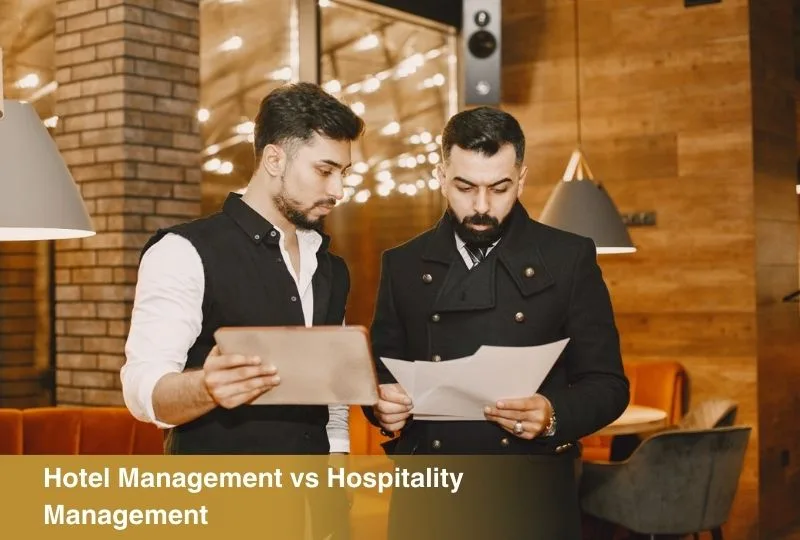
The debate on hotel management vs hospitality management is common among students choosing a service-industry career. Although these fields are closely related, they differ in scope, work environments, and long-term opportunities.  Understanding the key differences between hospitality and hotel management helps students make informed decisions about academic pathways and future roles.  Hospitality is broader and includes various service sectors, while hotel management focuses specifically on lodging operations. Both fields offer global career opportunities and steady growth, making them highly attractive for students who enjoy customer-centric professions. Understanding Hotel Management Hotel management focuses on the smooth functioning of hotel operations. Students learn about front office services, housekeeping, food and beverage operations, event coordination, and guest relations.  The field prepares professionals to manage hotels, resorts, and luxury accommodation facilities while ensuring customer satisfaction and operational excellence.  Hotel managers also oversee budgets, staffing, and administrative tasks. Understanding Hospitality Management Hospitality management is a wider discipline that includes travel, tourism, event management, food services, aviation, and hotel operations.  It trains students to manage customer experiences across multiple industries. This is why the difference between hospitality and hotel management lies in the diversity of sectors and overall service-focused expertise. Key Differences Between Hotel and Hospitality Management 1. Scope and Focus The difference between hospitality management and hotel management is that hotel management is more specialized, whereas hospitality covers broader service industries such as travel, aviation, restaurants, theme parks, and event services. 2. Career Opportunities Career paths in the two areas vary. Hotel graduates work in hotel chains, resorts, and property management, while hospitality graduates find roles in tourism, customer service, airlines, event planning, and corporate hospitality. 3. Required Skills and Education Hotel management prioritizes operational knowledge of lodging, while hospitality emphasizes customer experience, leadership, cultural awareness, and service management. 4. Work Environment Hotel roles are typically property-based, whereas hospitality positions may include tourism offices, airlines, cruises, event venues, and travel companies. 5. Salary and Growth Prospects Salary packages vary depending on the field. Understanding the salary of hotel management vs hospitality management helps students compare growth potential.  Hotel management often provides structured salary scales within hotels, while hospitality offers diverse salaries depending on the industry. Which Career Should You Choose: Hotel or Hospitality Management? Choosing between hotel vs hospitality management depends on your career goals. If you prefer structured hotel operations, hotel management is ideal.  If you want to explore tourism, events, aviation, and customer service sectors, hospitality management offers broader options.  Both fields require communication skills, leadership abilities, and a passion for service. Courses and Educational Pathways Institutions offer diplomas, bachelor’s degrees, and specialized certifications in both fields. Programs cover food production, tourism operations, front office management, communication skills, and cultural awareness.  Students must evaluate curriculum depth, internships, faculty experience, and placement records before selecting their academic path. Top Job Roles in Hotel and Hospitality Management Graduates can take up roles such as Front Office Executive Food & Beverage Manager Guest Relations Officer Travel Consultant Event Planner Tourism Officer Airline Ground Staff These are among the most popular choices highlighted when discussing the roles of hotel management vs hospitality management. Future Scope of Hotel and Hospitality Management The hospitality sector is expanding due to tourism growth, international travel, global events, and rising customer expectations. Both industries benefit from strong job availability and international mobility.  Students interested in global careers find these fields highly rewarding, making the hospitality and hotel management difference relevant when evaluating future trends. Skills to Build a Successful Career Essential skills include communication, problem-solving, customer service, leadership, teamwork, cultural sensitivity, time management, and adaptability.  Technical knowledge in reservations, event management, and property management systems is also valuable.  These skills shape a long-term hospitality vs hotel management career based on the chosen field. Conclusion Understanding the difference between animation and VFX careers helps students choose paths aligned with their interests, strengths, and long-term goals.  Hotel management and hospitality management both offer strong opportunities, but hospitality is broader, while hotel management is more specialized.  Students should consider their preferred work environment, career aspirations, and industry trends before selecting a pathway. Frequently Asked Questions What is the main difference between hotel management and hospitality management? The main difference is the scope. Hotel management focuses specifically on hotel operations, including rooms, food services, and guest relations. Hospitality management covers a wider range of service industries, such as tourism, aviation, events, food services, and travel. Hospitality offers broader career options beyond hotels. What are the job opportunities in hospitality management? Hospitality management offers roles in tourism companies, travel agencies, event management firms, airlines, cruises, restaurants, and customer service departments. Graduates can work as event planners, travel consultants, guest relations officers, and hospitality executives. The field provides diverse career paths across multiple service-oriented industries. What is the average salary in hotel vs hospitality management? Salary varies depending on industry and job role. Hotel management salaries follow structured organizational scales, particularly in hotel chains. Hospitality salaries vary widely because the industry includes tourism, aviation, events, and travel services. Both fields offer growth with experience, certifications, and international exposure. Can I work in tourism with a hotel management degree? Yes. Hotel management graduates can work in tourism roles such as travel consulting, destination management, customer service, and event coordination. The skills gained in hotel operations apply directly to tourism services, making hotel graduates suitable for several tourism-related careers. What skills are important for hospitality and hotel managers? Important skills include communication, leadership, customer service, cultural awareness, teamwork, time management, and problem-solving. Technical skills in property management systems, event planning, reservation software, and service operations also help students become competent professionals in the hotel and hospitality sectors. How do I choose between hotel and hospitality management as a career? Choose based on your interest and preferred work environment. Select hotel management if you enjoy structured hotel operations. Choose hospitality management if you want a broader career in tourism, events, airlines, restaurants, and customer services. Consider career goals, strengths, and long-term opportunities. Does Sigma University offer hotel or hospitality-related courses?

Hotel Management vs Hospitality Management – Key Differences Read More »

Travel & Tourism Management Career Pathways

How to Build Career Opportunities in Travel & Tourism Management

A career in travel and tourism management offers students a dynamic, global, and fast-growing professional path filled with creative responsibilities, customer engagement, and real-world experiences.  As industries like hospitality, aviation, events, digital tourism, and destination marketing expand, students now have more opportunities than ever to build successful careers in this sector.  Understanding the required skills, roles, qualifications, and career-building strategies is essential for shaping a strong future in the tourism field.  This guide serves as a complete travel and tourism management career guide, helping students take confident steps toward a rewarding future. Why Choose a Career in Travel & Tourism Management? The tourism sector is one of the world’s largest industries, offering diverse travel tourism management jobs in hotels, airlines, travel companies, cruise lines, events, and government tourism departments.  Students get opportunities to work globally, explore different cultures, and build careers with excellent growth potential. What Is Travel & Tourism Management? Travel and tourism management focuses on planning, organizing, and delivering travel services, experiences, and operations.  Students learn business management, customer service, destination planning, marketing, and hospitality skills to handle various roles in travel tourism management. Key Responsibilities in Tourism Management Designing tour itineraries Handling customer queries and bookings Managing travel operations and documentation Planning events or destination activities Promoting tourism services through marketing campaigns These tasks shape core travel and tourism management careers suited for service-oriented professionals. Educational Path: How to Start Your Career in Tourism Management To learn how to build a career in tourism management, students must begin with the right academic foundation, develop skills, and gain industry exposure. Popular Courses in Travel & Tourism Management BBA in Tourism & Hospitality Diploma in Travel & Tourism Bachelor of Hospitality & Tourism Management MBA in Tourism Management These programs introduce students to travel operations, tourism business systems, and global service standards taught in a travel and tourism management course. Sigma University’s BBA in Hotel Management Sigma University offers a comprehensive program that equips students for diverse tourism management careers through practical training, industry exposure, and placement support. Top Career Opportunities in Travel & Tourism Management Graduates enjoy multiple jobs after the travel tourism management course across various sectors. 1. Travel Consultant Advises clients on travel packages, destinations, and bookings. 2. Tour Operator Plans group and customized tours, managing logistics and itineraries. 3. Airline Operations Executive Handles ticketing, passenger coordination, and flight operations. 4. Tourism Marketing Specialist Manages digital and offline marketing for travel brands. 5. Event & Destination Manager Oversees destination events, MICE operations, and large-scale tourism activities. These roles define a strong travel tourism management career path for students. Essential Skills for a Successful Career in Tourism To succeed in this field, students need: Communication and customer service skills Cultural awareness Problem-solving abilities Organizational and planning skills Digital marketing knowledge Sales and negotiation skills These reflect the essential skills needed for travel and tourism management roles. Salary Expectations in Travel & Tourism Management The salary in travel tourism management varies depending on the job profile, experience, company, and location. Entry-level salaries are moderate, but opportunities grow quickly in airlines, luxury travel, digital tourism, cruises, and hotel chains. How to Build Your Career Path in Travel & Tourism Step 1: Choose the Right Academic Program Select a reputable institution offering industry-oriented study modules. Step 2: Gain Internship & Practical Experience Internships in hotels, travel agencies, airlines, or tourism companies enhance your profile. Step 4: Continue Upskilling Attend tourism events, seminars, and workshops for industry exposure. Step 3: Build a Professional Network Learn foreign languages, digital tools, marketing skills, and certifications to grow. Challenges & Opportunities in Tourism Careers While the industry offers rapid growth, it also demands strong interpersonal skills, adaptability, and the ability to work under pressure.  However, increasing global tourism, digital travel platforms, and sustainable tourism initiatives continue to expand career opportunities in travel and tourism management. Conclusion A future-focused approach, practical exposure, and the right skills can help students build a strong and rewarding career in travel and tourism.  Whether you wish to work in airlines, hotels, event management, government tourism, or digital travel brands, the industry offers limitless potential for growth and innovation.  With the right education and mindset, you can unlock exceptional travel and tourism management careers in India and abroad. Frequently Asked Questions How do I start a career in tourism after graduation? Begin by selecting a recognized travel and tourism management course, completing internships, and gaining hands-on industry exposure. Build strong communication, customer service, and organizational skills. Networking, attending industry workshops, and earning certifications will help you secure better opportunities in tourism companies, airlines, hotels, and travel agencies. Which course is best for travel and tourism jobs in India? Courses like BBA in Tourism & Hospitality, Diploma in Travel & Tourism, and Bachelor of Hospitality & Tourism Management offer strong foundations. These programs teach management, operations, and customer engagement, which are essential for travel tourism management jobs across airlines, hotels, travel companies, and tour agencies. What skills are required to succeed in the tourism industry? Key skills include communication, cultural awareness, customer service, digital marketing, itinerary planning, sales, and crisis handling. These skills needed for travel and tourism management help students build confidence and prepare for operational and managerial responsibilities in tourism and hospitality companies worldwide. What is the average salary after a travel and tourism management course? The salary in travel tourism management depends on the sector and role. Entry-level jobs in airlines, hotels, or travel agencies offer moderate salaries, but growth is rapid with experience. Roles such as tourism manager, travel consultant, and digital travel specialist offer better pay and strong career progression. How can students gain experience in travel and tourism while studying? Students can take internships in hotels, travel agencies, airports, and tourism offices. Volunteering at events, participating in tourism workshops, earning certifications, and joining student clubs add value to their profile and support a strong travel tourism management career path for students. Does Sigma University offer practical training or internships in hospitality and tourism? Yes.

How to Build Career Opportunities in Travel & Tourism Management Read More »

Top Emerging Careers in Hospitality & Tourism Industry

Top Emerging Career Opportunities in the Hospitality & Tourism Industry

The hospitality and tourism sector is evolving rapidly, creating diverse opportunities for students who aspire to work in global, service-oriented environments.  With new technologies, customer expectations, and sustainability practices shaping the sector, careers in hospitality tourism are more dynamic than ever.  Students now have access to innovative roles that redefine traditional pathways, offering creativity, growth, and international exposure.  As the industry expands across hotels, travel agencies, aviation, cruises, events, and digital platforms, graduates can explore flexible and rewarding professional journeys. Why Choose a Career in Hospitality & Tourism? Building a career in this sector offers global mobility, excellent growth potential, and the opportunity to work across hotels, airlines, cruises, travel startups, and international tourism boards.  The field blends creativity, people management, and operational excellence, making it ideal for students seeking diverse hospitality tourism job opportunities. Overview of the Hospitality & Tourism Industry The modern hospitality and tourism ecosystem now integrates technology, personalized guest experiences, sustainability, and digital operations.  These shifts have led to rising tourism industry careers that demand both managerial and technical expertise. Current Trends Driving the Industry Sustainable travel and eco-tourism Personalised hospitality using AI-driven systems Hybrid and large-scale event tourism Digital-first travel planning and booking Growth of luxury, wellness, and adventure tourism   Top Emerging Career Opportunities in Hospitality & Tourism 1. Sustainability Manager in Tourism Include your resume, academic transcripts, nursing course details, and identification documents. These sections help employers verify your qualifications and understand your academic foundation. 2. Travel Experience Designer A strong nursing internship portfolio guide includes clinical rotations, duties performed, case handling, and exposure gained. Document the departments you worked in, hours completed, and clinical skills practiced. 3. Digital Marketing Specialist for Hospitality Brands Add certifications such as CPR, first aid, and training workshops. Recognition, like awards or academic distinctions, strengthens your nursing profile. 4. Event & Destination Manager Many students work on case studies, community health projects, or research assignments. Include summaries, findings, and your role in these projects to showcase analytical and practical skills. 5. Revenue Management Analyst List seminars, conferences, webinars, or extension activities attended. These show your commitment to continuous learning and professional ethics. 6. Food & Beverage Innovation Expert Reflection helps demonstrate your ability to think critically and improve. Many nursing portfolio examples include reflective logs from clinical rotations. 7. Hospitality Technology Consultant Recommendations from faculty, clinical instructors, or hospital supervisors add credibility to your work and character. 8. Cruise & Airline Operations Executive Include videos, digital certificates, scanned documents, and organized folders. A digital nursing portfolio for students improves presentation and accessibility. 9. Tourism Policy & Development Officer Works with government bodies to develop regional or national tourism strategies 10. Content Creator & Travel Influencer Shares digital content, building brand collaborations within the tourism ecosystem. These new roles represent some of the strongest emerging roles in the hospitality industry. Skills Required for Careers in Hospitality & Tourism To thrive in this sector, students must develop strong communication, customer service, leadership, cultural sensitivity, digital marketing knowledge, negotiation abilities, and teamwork.  Technical knowledge of travel software, event systems, and hotel operations is essential. These reflect the core skills required for hospitality tourism roles today. Educational Pathways for Hospitality & Tourism Careers Students can pursue diplomas, bachelor’s degrees, or specialized postgraduate programs such as: BBA in Hotel Management Bachelor of Hospitality & Tourism Management Diploma in Travel & Tourism MBA in Hospitality Management These programs prepare students for managerial and operational career opportunities in tourism management. Growth Sectors in Hospitality & Tourism Several sectors continue to expand rapidly, offering increasing jobs in hospitality tourism: Luxury hotels and resorts Aviation and airline services Cruise lines Wellness tourism Adventure tourism Event management Eco-tourism Career Advancement & Global Opportunities Hospitality graduates enjoy excellent international mobility, with opportunities in the Middle East, Europe, Southeast Asia, Australia, and North America.  Companies often offer fast-track management programs that support leadership development and cross-cultural learning. Salary Trends in Hospitality & Tourism Salaries vary across roles and regions. Entry-level positions offer steady growth, while managerial roles in hotels, digital marketing, and tourism development provide higher income potential.  International positions often have additional benefits such as housing, travel allowances, and incentives. How to Prepare for a Successful Career in Hospitality & Tourism Students must build strong communication skills, industry-specific certifications, practical exposure, and customer service excellence. Soft skills, technology awareness, and language proficiency significantly improve employability. Internships & Hands-On Experience Practical learning through internships, industry visits, hotel training, and live projects plays a major role in shaping professional readiness in this sector. Conclusion The hospitality and tourism industry offers some of the most dynamic and rewarding career pathways for modern learners.  With diverse hospitality tourism job opportunities, technological advancements, and global expansion, the sector is ideal for creative, service-driven, and ambitious students.  Whether you aspire to work in hotels, travel companies, digital platforms, or luxury tourism, this industry provides endless room for growth. Frequently Asked Questions What are the most in-demand careers in hospitality and tourism? Some of the most in-demand roles include travel experience designers, sustainability managers, revenue analysts, digital marketing specialists, and hospitality technology consultants. These careers align with global industry needs and digital transformation in hospitality. Which sectors in hospitality and tourism are growing fastest? Luxury travel, eco-tourism, wellness tourism, event management, aviation services, and digital hospitality platforms are expanding rapidly. These sectors offer strong growth and new opportunities for skilled professionals entering the industry. Are digital marketing jobs available in the tourism industry? Yes. Tourism brands require SEO specialists, social media managers, content creators, and online advertising experts. These professionals help companies reach travellers and build digital presence across platforms. What are the salary trends for hospitality graduates? Salaries depend on role, location, and employer. Entry-level pay is steady, with managerial roles offering high growth potential. International positions often include additional perks such as accommodation and travel allowances. What degree or diploma should I pursue for a career in tourism? Popular options include a Bachelor of Hospitality & Tourism Management, BBA in Hotel Management,

Top Emerging Career Opportunities in the Hospitality & Tourism Industry Read More »

Key Skills Gained from Bachelor of Hospitality & Tourism Management

Professional Skills Gained from a Bachelor of Hospitality and Tourism Management (BHTM)

What You Learn in Hospitality & Tourism Future of Modern Living A Bachelor of Hospitality and Tourism Management is one of the most dynamic degrees for students seeking careers in hotels, travel, events, aviation, and customer-centric industries. As India’s tourism and service sectors continue expanding, organizations demand professionals with strong communication abilities, management expertise, and cultural intelligence. The essential BHTM skills taught during the program help students become confident, customer-focused, and industry-ready. From soft skills to operational competencies, this degree offers a complete foundation for students who want to build long-term careers in hospitality and tourism. What Is a Bachelor of Hospitality and Tourism Management (BHTM)? A BHTM degree is a specialized undergraduate program that focuses on hospitality operations, tourism services, event management, front office management, food production, guest relations, and travel administration. Students develop essential skills from a BHTM degree, including business communication, customer service, digital tools, and managerial competencies required for the global hospitality sector. Why Professional Skills Matter in the Hospitality & Tourism Industry The hospitality and tourism industry thrives on service excellence. To meet modern customer expectations, professionals must combine technical knowledge with interpersonal strengths. This makes career skills in hospitality tourism management essential for students aiming for hotel, aviation, resort, cruise, or event management roles. Employers increasingly prefer individuals who demonstrate leadership, teamwork, adaptability, and strong decision-making skills. Key Professional Skills Gained from a BHTM Degree 1. Communication and Interpersonal Skills Effective communication is central to hospitality. Students learn professional speaking, guest interaction, email etiquette, and service communication. These hospitality management skills for students in India help graduates handle international guests, resolve complaints, and maintain strong customer relationships. 2. Leadership and Team Management Hotels and tourism companies rely on strong supervisors and managers. A BHTM program trains students to motivate teams, coordinate staff, and lead operations. These skills are vital for growth into senior roles. 3. Cultural Awareness and Global Mindset Since tourism is international, students learn cultural sensitivity and global hospitality standards. This prepares them for multinational hotel chains and international tourism environments. 4. Problem-Solving and Decision-Making Daily operations require professionals to handle unexpected situations. Students develop practical decision-making skills to ensure smooth guest experiences. 5. Time and Event Management Event planning, scheduling, and multitasking are essential key skills gained in BHTM. Students learn how to manage conferences, weddings, and corporate events efficiently. 6. Marketing and Sales Skills Hospitality requires strong promotions and customer engagement. Students learn digital marketing, branding, and tourism sales strategies. 7. Financial and Business Acumen Understanding budgeting, costing, and revenue management is essential. These competencies strengthen students’ business understanding and operational success. 8. Technology & Digital Tools in Hospitality The industry increasingly depends on digital systems. Students learn hotel management software, online booking systems, CRM tools, and digital analytics. 9. Soft Skills vs Hard Skills in Hospitality Careers A BHTM degree develops both soft skills and technical knowledge. Soft skills include communication, empathy, and conflict resolution, while hard skills involve operations, software handling, and business processes. This balance reflects the essence of soft skills vs hard skills in hospitality & tourism careers. 10. Job-Ready Skills after BHTM The combination of practical exposure and operational knowledge ensures students graduate with strong job-ready skills after BHTM, prepared for front office, food service, guest relations, travel operations, and event roles. How BHTM Prepares You for a Successful Career Practical Training & Internships Internships are integral to the program. Students work in hotels, resorts, travel agencies, and tourism organizations, gaining real-world experience and industry exposure. Real-World Project Experience Hands-on projects in hotel operations, event management, and travel planning help students apply classroom knowledge to practical tasks. Professional Ethics and Customer Service Orientation Successful hospitality professionals maintain high standards of behavior. A BHTM program builds integrity, professionalism, and service ethics that employers value. Why Choose Sigma University for Your BHTM Degree Sigma University offers modern hospitality labs, industry partnerships, internships with leading hotels, and a curriculum aligned with global standards. Students receive guidance from experienced faculty and benefit from a learning environment that supports creativity, confidence, and professional excellence. Conclusion A Bachelor of Hospitality and Tourism Management equips students with vital skills for today’s competitive service sector. With strong BHTM skills, industry exposure, and holistic development, graduates can pursue diverse roles across hotels, events, tourism, airlines, and travel services. The program builds a solid foundation for students aspiring to leadership roles and global opportunities, making it one of the most valuable qualifications for hospitality careers. Frequently Asked Questions What professional skills do students gain from a BHTM degree? Students gain communication, leadership, cultural awareness, customer service, and operational management skills. They also learn digital tools, marketing techniques, and problem-solving abilities essential for hospitality careers. These competencies help them deliver quality service and handle diverse guest needs confidently. What technical or hard skills are needed for success in the hospitality industry? Hard skills include hotel management systems, housekeeping operations, food production basics, event planning tools, front office software, and financial management. These skills support students in executing day-to-day tasks efficiently while meeting professional standards in hotels, resorts, and tourism businesses. How do BHTM programs in India help develop leadership and communication skills? BHTM programs use practical training, role-play, group projects, and internships to build leadership and communication skills. Students learn team coordination, guest interaction, crisis management, and professional etiquette, preparing them for supervisory and managerial roles in hospitality and tourism sectors. What are the top career opportunities after completing a BHTM? Graduates can pursue roles in hotels, airlines, travel agencies, cruise lines, event companies, resorts, and tourism boards. Popular positions include guest relations executive, event coordinator, travel consultant, front office associate, food service manager, and hotel supervisor. How does practical training help BHTM students become job-ready? Practical training exposes students to real operations in hotels and tourism organizations. It helps them understand industry workflows, enhances customer-handling abilities, builds confidence, and allows them to apply classroom learning to real-world situations. This experience improves employability significantly. What is the difference between soft and hard skills in hospitality

Professional Skills Gained from a Bachelor of Hospitality and Tourism Management (BHTM) Read More »

BBA Program in Hotel Management

An Introduction to Our BBA Program in Hotel Management

The world of hospitality is booming, and with it, the need for qualified professionals who can balance business management skills with the art of delivering unforgettable guest experiences. A BBA in Hotel Management is the ideal choice for students looking to combine managerial expertise with practical hospitality know-how. At Sigma University, we prepare students to thrive in this global industry with a strong academic foundation and hands-on learning. Table of Contents What is BBA in Hotel Management? Overview of the Program Course Duration & Recognition What Does a BBA in Hotel Management Involve? Who Should Consider This Course and Why? Highlights of the BBA Hotel Management Program at Sigma What You’ll Study: Year-by-Year Curriculum Overview Eligibility Criteria and How to Apply Where Can a BBA in Hotel Management Take You? Career Possibilities Post-Graduation Industries Beyond Hotels Higher Studies Pathway Why Hospitality is a Future-Proof Career Conclusion – Let Your Hospitality Career Begin at Sigma FAQs on BBA in Hotel Management Course What is BBA in Hotel Management? Overview of the Program A BBA in Hotel Management is a 3-year undergraduate program that blends business administration with specialized hospitality training. Covers everything from marketing, accounting, and HR to hotel operations, event management, and tourism. Designed to create professionals with both managerial acumen and practical service skills. Course Duration & Degree Recognition Duration: 3 Years (6 Semesters). Recognition: UGC-recognized degree with global acceptance. Valid for higher studies in India & abroad (including MBA and specialized hotel management programs). What Does a BBA in Hotel Management Involve? A mix of classroom learning and real-world training. Combines business administration (finance, HR, marketing) with hospitality-specific knowledge (food production, front office, housekeeping, event planning). Unlike a regular BBA, this program prepares you specifically for the service and hospitality industry, which is one of the fastest-growing global sectors. Who Should Consider This Course and Why? Students who have just completed 12th standard (any stream). Perfect for those who: Enjoy meeting new people. Love planning events and organizing experiences. Dream of working in luxury hotels, airlines, resorts, or tourism. Ideal for students looking for a career with growth, travel, and international exposure. Highlights of the BBA Hotel Management Program at Sigma Real-World Training from Day One Mock hotel setups & simulated front-desk operations. State-of-the-art kitchen labs and hospitality workshops. Learn from the Industry’s Best Faculty includes experienced hospitality professionals. Guest lectures from renowned hotel managers and industry leaders. Access to Internships & Industry Projects Partnerships with leading hotel chains and resorts. Mandatory internships for real-world exposure. Campus Life That Builds Confidence Language labs for communication excellence. Personality development workshops. Grooming sessions and professional etiquette training. What You’ll Study: Year-by-Year Curriculum Overview Year Subjects Covered Year 1 Basics of Management, Introduction to Hospitality, Food Production, Front Office Operations, Communication Skills Year 2 Marketing Management, Housekeeping, Financial Accounting, Event Management, Tourism Studies Year 3 Strategic Management, Hotel Law & Ethics, Advanced Food & Beverage, Internship & Industry Project What Are the Eligibility Criteria and How to Apply? Eligibility: Students from any stream (Arts/Commerce/Science) after 12th standard can apply. Admission Process: Fill application form (online/offline). Submit required documents. Appear for counseling/interview. Documents Required: 10+2 Mark sheet. Passport-size photos. ID Proof. Where Can a BBA in Hotel Management Take You? Career Possibilities Post-Graduation Hotel Manager. Guest Service Associate. Food & Beverage Manager. Event Coordinator. Front Office Executive. Industries Beyond Hotels Event Management Companies. Aviation & Airlines. Luxury Resorts & Cruise Lines. Tourism & Travel Agencies. Retail & Luxury Brands. Higher Studies Pathway MBA in Hospitality Management. Specialized Postgraduate Diplomas (India/Abroad). Masters in Tourism & Hotel Management. Why Hospitality is a Future-Proof Career The hospitality and tourism industry is one of the world’s largest employers. Career in hotel management ensures: Global opportunities. Job security. Personal growth with exciting challenges. With India emerging as a top travel destination, the scope for hotel management graduates is huge. Conclusion – Let Your Hospitality Career Begin at Sigma The BBA in Hotel Management at Sigma University is more than a degree—it’s a gateway to a global career filled with opportunities. With expert training, strong industry connections, and holistic student development, Sigma helps you turn your hospitality dreams into reality. 👉 Take the first step today. Apply for BBA in Hotel Management at Sigma University FAQs on BBA in Hotel Management Course 1. What is the duration of the BBA Hotel Management program? It is a 3-year undergraduate program divided into 6 semesters. 2. Can students from any stream apply for this course? Yes, students from any stream after 12th (Science, Commerce, or Arts) are eligible. 3. What are the job options after completing the course? Graduates can work as Hotel Managers, Event Planners, Guest Relations Executives, Food & Beverage Managers, and Airline Hospitality Staff. 4. Does Sigma University offer placements in reputed hotels? Yes, Sigma has tie-ups with leading hotel chains across India and abroad, offering students excellent placement opportunities. 5. Are scholarships or financial aid available? Yes, merit-based scholarships and financial assistance are provided to deserving students. 6. Is this degree recognized for study abroad? Yes, the BBA in Hotel Management degree from Sigma is recognized for higher education globally. 7. Can I pursue an MBA after BBA in Hotel Management? Absolutely! Many students go on to pursue an MBA in Hospitality or related fields after graduation. 8. What types of internships are provided? Students get opportunities to intern with leading hotels, resorts, and hospitality companies, ensuring strong industry exposure. Admissions Open Dr. Srinath Achar Head of Faculty of Hospitality & Tourism Department Share Blog:

An Introduction to Our BBA Program in Hotel Management Read More »

Skills That Make an Outstanding Career in Hotel Management-Sigma University

Skills That Make an Outstanding Career in Hotel Management

Food has a unique way of bringing people together, creating memorable experiences that go beyond just a meal. A hotel management career offers an exciting and rewarding path, especially for students willing to enter the hospitality industry. However, success in this industry requires more than just passion. It demands a strong set of skills to thrive in its fast-paced environment.  In this blog post, we will delve deep into why you should choose a career in Hotel Management, the qualifications and necessary skills required to excel, the benefits of training programs, and finally, some proven tips to excel in building a career in hotel management. Why Choose a Career in Hotel Management? The hospitality industry is one of the core drivers of global economies, contributing significantly to employment and economic growth. As the tourism industry continues to boom, hotel management services and professionals are in high demand, especially in Asian and African nations. A successful career in hotel management offers: Diverse Career Paths: From managing luxury hotels and resorts to overseeing operations on cruise ships and event planning, the possibilities are unimaginable. Global Opportunities: The skills acquired throughout hotel management can be used globally, irrespective of state or country, allowing professionals to work in various international and local settings. Dynamic Work Environment: In the hotel management industry, each day brings new challenges and experiences, making this field exciting for those who thrive in dynamic settings. The Importance of Hotel Manager Qualifications While hands-on experience is invaluable in the hotel management industry, the right qualifications provide a strong foundation for excelling in this competitive field. Formal education helps aspiring professionals gain essential knowledge in hospitality management, customer service, finance, and operations, helping them develop effective leadership and problem-solving skills. Essential Skills for a Successful Hotel Management Career A successful hotel management career is a seamless blend of interpersonal, leadership, and analytical skills. Some of the foundational skills include: Communication and Interpersonal Skills Effective communication is the foundation of the hospitality industry and hotel manager skills. Hotel managers must interact seamlessly and effectively with guests, staff, and stakeholders. Active listening, clear articulation, and empathy are vital to ensuring guest satisfaction and fostering a positive work environment. Leadership and Team Management Skills Leading diverse teams requires strong leadership capabilities. Some prominent hotel manager skills include motivating the staff, effectively delegating tasks, and creating a collaborative environment. Hotel management courses like those offered by Sigma University emphasize experimental learning to master these skills and provide hands-on training to prepare our students for industry. Problem-solving and Decision-Making Skills The hospitality sector is fast-paced, and unforeseen challenges are common. Managers must think on their feet, analyze situations swiftly, and make informed decisions to maintain smooth operations, uphold service quality, and ensure customer satisfaction. Hotel Manager Training Programs: Building Your Expertise Structured training programs are instrumental in bridging the gap between theoretical knowledge and practical application. They offer insights into real-world scenarios, preparing aspirants for the multifaceted nature of hotel management. Top Training Programs for Hotel Managers Sigma University offers specialized hotel manager training programs that combine academic excellence with practical exposure. Our curriculum is designed to stimulate real-life situations, ensuring that students are industry-ready upon graduation. Benefits of Continuous Skill Development The hospitality industry is fast and ever-evolving, with new trends and technologies emerging regularly. Continuous skill development ensures that professionals remain competitive and adapt to changing market dynamics. Engaging in workshops, seminars, and advanced courses can lead students to career advancement and personal growth. Hotel Management Course Eligibility and Qualifications Aspired students must understand the prerequisites for a hotel management course. Before enrolling in any hotel management course, students must also understand the eligibility criteria and education requirements.  Eligibility Criteria for Hotel Management Courses The minimum requirement is 10+2 (for undergraduate courses) or a bachelor’s degree (for postgraduate courses) from a recognized board or university. In addition, most institutes require at least 50% marks in the qualifying examination (varies by institution). Some reputed institutes also require standard entrance exams or institute-specific tests for admission. Tips to Excel in Your Hotel Management Career Pursuing a career in hotel management can be both challenging and rewarding. As the backbone of a hotel’s operation, managers ensure guests have a memorable experience while maintaining profitability. Whether you’re just starting or looking to enhance your current skill set, there are key areas to focus on that can set you apart as a top-tier hotel manager. Networking in the Hospitality Industry Building a strong professional network can unlock new doors to opportunities and provide valuable insights. Attending industry events, joining professional associations, and connecting with mentors can significantly enhance career prospects. Staying Updated on Hotel Management Services Trends The hospitality industry is dynamic, always thriving on guest expectations and technological advancements. Staying ahead of the latest trends in hotel management services, such as sustainable practices, digital innovations, and personalized guest experiences, ensures managers can implement best practices and maintain a competitive edge. Mastering Hotel Manager Skills for a Bright Future A successful career in hotel management is both challenging and rewarding, offering great opportunities to make a significant impact in the hospitality sector. By acquiring these essential skills, pursuing relevant qualifications, and committing to continuous learning, aspiring hotel managers can look forward to a fulfilling and successful career in hotel management services. For those ready to get on this exciting journey, institutions like Sigma University provide the education and necessary training to thrive in the dynamic world of hotel management. FAQs What skills are essential for a successful career in hotel management? To succeed in hotel management services, you need a mix of communication, interpersonal, managerial, and problem-solving skills, along with adaptability and attention to detail.  What qualifications are required for hotel management courses? To enroll in a hotel management training program, you generally need the following: A Higher Secondary Certificate (HSC) or its equivalent for undergraduate courses. A bachelor’s degree in any field is typically required for postgraduate courses. Check specific requirements with the institution offering the program. Can

Skills That Make an Outstanding Career in Hotel Management Read More »

master-the-art-of-food-and-beverage-service-by-getting-certified

Master the Art of Food and Beverage Service by getting certified

The food and beverage (F&B) industry is one of the most dynamic, fast-growing, and rewarding sectors in hospitality. From luxury hotels and fine dining restaurants to cafes, resorts, and cruise lines—the demand for trained professionals in F&B service is booming. But to stand out in such a competitive space, practical training and professional certification are essential. At Sigma University, Vadodara, our Three-Month Certified Food and Beverage Service Course is designed to bridge the gap between raw talent and industry-ready skills. Through a blend of classroom learning, hands-on training, and real-world exposure, students not only master technical service but also build the confidence needed to succeed in a global career in hospitality. Why Choose a Food and Beverage Service Course? Many people assume that working in food and beverage only requires good communication and basic serving skills. But in reality, the F&B sector demands professional training, deep knowledge of menu planning, customer service, and even the psychology of hospitality. Here’s why pursuing a Food and Beverage Service Course is worth it: Growing Demand: With rising international travel, the expansion of luxury dining, and globalized food culture, the hospitality sector constantly seeks certified professionals. Career Boost: Completing a certification improves employability and opens doors to reputed hotels, restaurants, and resorts. Skill Recognition: Employers value trained individuals who can manage customer expectations, ensure hygiene, and deliver excellence under pressure. Professional Growth: Certification gives you credibility, paving the way for leadership roles in the long run. If you’re serious about building a career in the food and beverage industry, a structured training program is your first step. About the Three-Month Food and Beverage Service Course Sigma University’s Food and Beverage Service Course is more than just a classroom program—it’s a complete industry immersion. Course Duration and Structure This is a three-month intensive program that combines: Classroom Learning: Theoretical understanding of service operations, hygiene standards, and management principles. Practical Sessions: Simulated restaurant setups where students practice real serving techniques. Industry Visits: Exposure to hotels, resorts, and cafes for on-ground experience. In short, students get a perfect balance of knowledge and practice to prepare them for the real world. Curriculum Highlights The course covers everything a professional needs to excel in F&B service: Menu Planning & Service Techniques: Learn to design menus, recommend food pairings, and practice fine-dining etiquette. Customer Service Skills: From welcoming guests to handling complaints with professionalism. Hygiene & Safety: Essential practices to ensure safe and quality dining experiences. Beverage Knowledge: Basics of coffee, mocktails, and international beverage trends. Hands-on Practical Training Unlike generic courses, Sigma University emphasizes practical exposure: Mock restaurant setups with real service scenarios. Training with industry-standard tools like trays, POS systems, and beverage equipment. Field visits to reputed hotels and restaurants for direct industry interaction. By the end of the program, students develop the confidence, agility, and customer-centric mindset that top recruiters look for. Skills You Will Gain A good hospitality professional blends technical skills with soft skills. Here’s what you’ll learn in this course: Food Handling & Service: Proper methods of serving different cuisines. Customer Interaction: Communication, body language, and complaint resolution. Wine & Beverage Knowledge: Basics of pairing food with drinks. Hygiene & Safety Practices: Maintaining international standards of cleanliness. Leadership & Teamwork: Managing service staff and operations effectively. These skills ensure that you don’t just get a job—you thrive and grow in the F&B sector. Tools and Techniques Taught in the Course Today’s F&B industry blends traditional service with modern tools. At Sigma University, you’ll learn to use: POS (Point of Sale) Systems for billing and order tracking. Service Trays and Beverage Tools for efficient handling. Plating and Presentation Techniques for aesthetic service. Table Etiquette & Fine Dining Protocols to meet international standards. Mastering these not only makes you job-ready but also prepares you for future leadership roles. Career Opportunities After the Course The biggest question students ask is: “What career options will I have after completing this course?” Here’s a roadmap of opportunities: Entry-Level Positions Fresh graduates can step into roles such as: F&B Assistant Service Associate Bar Staff Trainee Manager These positions allow students to gain experience and build their professional networks. Advanced Opportunities With a few years of experience, students can move into leadership roles like: Restaurant Manager F&B Supervisor Sommelier (wine expert) Hospitality Trainer The food and beverage industry offers limitless growth, with opportunities in hotels, luxury resorts, restaurants, airlines, and even cruise liners. How to Enroll in Sigma University’s F&B Course Getting started is simple: Visit Sigma University’s official website. Navigate to the Food and Beverage Service Program page. Fill in the online application form. Submit the required documents and complete registration. Confirm admission and begin your journey into hospitality. Benefits of Getting Certified Why should you choose a certified food and beverage service course over informal training? Personal Growth and Skill Enhancement This program transforms your personality—helping you gain confidence, refine communication, and build leadership qualities. Industry Recognition and Credibility Certification is a badge of credibility that employers immediately recognize. It shows that you’re professionally trained, reliable, and ready for the job. Professional Edge Greater employability in top hotels, cafes, and resorts. Access to higher-paying jobs. Opportunities to pursue advanced degrees like Master in Food and Beverage Management. Advance Your Career with F&B Certification Whether you’re fresh out of school or planning a career shift, the F&B certification from Sigma University is your gateway to success. With the right blend of skills, training, and recognition, you’ll not only secure jobs in India but also open doors to international opportunities in hospitality. FAQs About Food and Beverage Course 1. How can I get practical experience in food and beverage service quickly? By enrolling in Sigma’s program, which includes simulated setups and industry visits for real-world training. 2. Is a three-month F&B course enough to start a career in hotels or restaurants? Yes, it equips you with essential skills to begin working in entry-level F&B roles. 3. Can this course help me get certified in food and beverage management? Yes, you’ll

Master the Art of Food and Beverage Service by getting certified Read More »

Scroll to Top