
Faculty of Engineering Programs for Innovation and Technical Excellence
About Faculty of Engineering & Technology at Sigma University
The Diploma in Engineering at Sigma University offers a strong foundation in core engineering principles, emphasizing practical skills,
industry relevance, and career readiness to prepare students for advanced studies or technical roles.

About the Faculty of Engineering & Technology
If you’re looking at engineering colleges in Gujarat, Sigma University’s Faculty of Engineering & Technology offers a range of programmes across core engineering and emerging technology fields.
From understanding fundamental engineering concepts to working on research and practical projects, students get opportunities to learn in different settings.
Classroom teaching is supported by laboratory sessions, project work, internships and exposure to industry practices.
The aim is to help students move beyond learning concepts for examinations and develop the technical knowledge, practical skills and problem-solving approach needed to work in engineering environments.
Vision, Mission & Academic Philosophy
The faculty focuses on building an academic environment where students can develop technical knowledge along with confidence, professional values and a broader understanding of how engineering can contribute to society.
Interdisciplinary learning forms an important part of this approach. Students can connect concepts across different areas of engineering while working with modern infrastructure, experienced faculty and practical learning methods.
The learning environment also encourages students to explore innovation, entrepreneurship and research through interactions with industry, academic institutions and other knowledge partners.
Accreditations, Approvals & University Rankings
When choosing an engineering programme, accreditation and institutional recognition are important factors to consider. Sigma University is recognised by the University Grants Commission (UGC), while its engineering programmes are approved by the All India Council for Technical Education (AICTE).
The engineering faculty has also received recognition for its academic and institutional work. The Sigma Institute of Engineering received the ISTE Chapter Award in 2020 and 2021 and was recognised under the ARIIA 2021 framework for innovation and entrepreneurship.
It was also ranked among the top 20 engineering institutes in the West Zone in the Times Engineering Institute Ranking Survey.
These recognitions complement the factors students usually consider while choosing an engineering college, including programme options, laboratory facilities, faculty expertise, industry exposure and career support.
Engineering Programs Offered
1. Undergraduate Engineering Programs (B.Tech)
Sigma offers four-year B.Tech programmes across core engineering disciplines and emerging technology areas.
| Programme | Programme Overview |
|---|---|
| B.Tech in Computer Science & Engineering | Covers software development, algorithms, systems engineering, cloud technologies and security, preparing students for technology-focused careers. |
| B.Tech in Mechanical Engineering | Covers machines, dynamics, manufacturing processes, design tools and automation, with practical exposure to physical systems. |
| B.Tech in Civil Engineering | Focuses on structural design, construction technology, infrastructure planning and project implementation. |
| B.Tech in Electrical Engineering | Covers electrical systems, power systems and control technologies for energy, automation and industrial applications. |
| B.Tech in Artificial Intelligence & Data Science | Focuses on machine learning, AI algorithms, data analytics and data-driven applications. |
Students can also explore B.Tech options in Chemical Engineering, Electronics & Communication Engineering, Computer Engineering, Information Technology and Cyber Security, giving them the flexibility to choose a field that matches their interests and career plans.
2. Postgraduate Engineering Programs (M.Tech)
M.Tech programmes allow engineering graduates to move deeper into specialised technical and research areas.
3. M.Tech Specialisations & Research Focus
Postgraduate learning places greater emphasis on advanced concepts, specialised technical knowledge and research. Depending on the programme, students can explore areas related to computing, robotics, power systems, environmental technology and other advanced engineering applications.
3. Diploma Engineering Programs
A three-year diploma programme provides students with a technical foundation after Class 10 and offers an early entry point into engineering education.
Diploma Courses & Industry Alignment
Sigma offers Diploma programmes in Civil, Mechanical, Electrical, Computer and Information Technology Engineering. The programmes combine classroom instruction with practical sessions, laboratory work and technical skill development.
This practical focus helps diploma students become familiar with engineering tools, processes and applications while building the foundation required for further technical education or entry-level industry roles.
Departments & Academic Structure
1. Department of Computer Engineering
Coding languages, systems architecture and software development form the core of computer engineering education. Students also work with modern technologies such as cloud platforms and databases.
The department connects programming fundamentals with application development, computing systems, emerging technologies and cybersecurity. Practical assignments and projects help students understand how software and hardware work together to solve technical problems.
2. Department of Mechanical Engineering
Mechanical theory is paired with machine laboratories and workshops. Internships and design projects connect classroom concepts with practical mechanical systems.
Students can develop practical understanding of machine design, manufacturing, automation and mechanical problem-solving through workshops, laboratory activities and project-based learning.
3. Department of Civil Engineering
The department focuses on infrastructure fundamentals and site exposure. Students use relevant engineering tools and gain practical understanding through field-based activities.
The learning process connects structural concepts and construction methods with real project requirements, helping students understand how infrastructure is planned, designed and executed.
4. Department of Electrical Engineering
The department focuses on power generation, distribution, automation and smart-grid concepts.
Students also explore electrical systems and control technologies that are relevant to modern industrial, energy and automation applications. Practical learning helps them understand how electrical principles are applied to real systems.
Faculty Members & Academic Leadership
Highly Qualified Professors & Industry Experts
The Faculty of Engineering & Technology brings together experienced academics and professionals with exposure to teaching, research and industry. Faculty members guide students through academic projects, technical activities and research work.
This mentorship gives students an opportunity to seek guidance not only for their coursework but also for projects, technical competitions, research interests and career planning.
Teaching Excellence, Research & Patents
Faculty members contribute to research activities, technical publications and innovation projects. Students interested in research can work with faculty members on technical problems, develop project ideas and gain experience in presenting or documenting their work.
Laboratories & Research Facilities
1. Advanced Engineering Labs
Practical learning is supported by more than 100 laboratories across different disciplines, including facilities related to AI, circuit design, CNC and thermal engineering.
AI, Robotics, CAD/CAM, IoT & Simulation Labs
Students get hands-on exposure to tools and platforms such as CNC machines, embedded systems and robotics equipment.
Working with such facilities allows students to experiment with designs, test technical concepts, identify problems and improve their solutions through practical application. Laboratory work also gives students experience with the tools and processes commonly used across different engineering disciplines.
2. Research Centers & Innovation Cells
Students can take part in research and innovation activities with faculty guidance.
The Institution’s Innovation Council provides another platform for students to participate in innovation-focused activities, idea development and entrepreneurship initiatives.
This can be particularly useful for students interested in taking a technical project beyond the classroom and exploring how an idea can become a practical solution.
Industry Interface & Skill Development
1. Industry Partnerships & MoUs
Industry interaction gives engineering students a chance to understand workplace expectations before graduation. Sigma University has partnerships and MoUs with organisations including Epoxy House, Wardwizard Innovations & Mobility, Infosys Springboard, IBM, Olive Technology, Oneiro Chemicals and Rishabh Software.
These industry connections can support practical learning, technical training, internships, expert interactions and exposure to workplace practices. They also give students a better understanding of how the concepts they study are applied across different engineering sectors.
2. Skill Development & Certification Programs
Workshops, bootcamps and certification programmes allow students to develop skills beyond their regular academic curriculum.
From technical tools and emerging technologies to professional skills, these activities can help students build a stronger skill set before they begin internships or participate in placement drives.
Placements & Career Opportunities
Placement Highlights & Recruiters
Sigma University has a network of more than 250 recruiters across different sectors. Placement opportunities can differ from one student to another based on engineering branch, academic performance, technical skills, projects, communication abilities and individual recruiter requirements.
Career Paths After Engineering at Sigma University
Engineering graduates can explore roles such as software developer, design engineer, data analyst and project engineer.
Career options can also extend into manufacturing, construction, electrical systems, automation, cybersecurity, data, IT services and other technical domains, depending on the student’s specialisation and skill set.
Students may also choose higher studies, professional certifications, research or entrepreneurship after completing their degree.
Admission Process & Eligibility
1. Eligibility Criteria for Engineering Courses
For B.Tech, students need to meet the applicable Class 12 qualification and subject requirements. Diploma programmes generally require Class 10 qualification, while M.Tech admission requires a relevant bachelor’s degree.
Since eligibility can differ across programmes and admission categories, students should check the specific requirements for their chosen course before applying.
2. How to Apply - Step-by-Step Admission Process
The application process can be approached in a few simple steps:
- Choose the engineering programme and check its eligibility requirements.
- Complete the application through the Sigma University admission portal.
- Submit the required academic, identity and supporting documents.
- Complete the applicable admission or selection formalities.
- Confirm the admission and complete the required fee payment within the prescribed timeline.
Students should check the latest admission schedule and programme-specific requirements before beginning their application.
Why Choose Sigma University for Engineering?
Choosing an engineering college involves more than comparing course names. Students also need to look at practical learning opportunities, laboratories, faculty support, industry exposure, research opportunities and career preparation.
| Factor | Sigma University | Other Engineering Colleges |
|---|---|---|
| Programme choice | Core and emerging engineering programmes | Varies by institution |
| Practical learning | Labs, workshops and project-based activities | Depends on available facilities |
| Industry exposure | Industry partnerships, MoUs and technical activities | Varies by institution |
| Research & innovation | Research projects, publications, patents and innovation initiatives | Depends on institution |
| Placement support | Network of 250+ recruiters | Varies by institution |
With multiple engineering disciplines, practical laboratories, industry interaction, research activities and technical skill development, students have several avenues to build their engineering knowledge and professional capabilities during their degree.
FAQs - Faculty of Engineering & Technology
Sigma University offers engineering programmes supported by practical learning, laboratories, industry exposure and career support. The right choice ultimately depends on the student’s preferred engineering branch, learning priorities, career goals and the specific opportunities they want from a university.
The university has a network of more than 250 recruiters. Actual placement opportunities can vary based on the student’s engineering branch, technical and communication skills, academic profile, projects and recruiter requirements.
Computer Science, AI & Data Science, Electrical Engineering and other engineering branches can lead to different career paths. Rather than choosing a branch only because it is considered popular, students should look at the subjects involved, the type of work they enjoy and the career direction they want to pursue.
Candidates must meet the applicable Class 12 and subject requirements for B.Tech admission. Diploma holders may also be eligible for lateral entry into Semester III through the applicable admission route.
Students can apply through the Sigma University admission portal, submit the required documents and complete the applicable admission formalities.
The exact process, eligibility conditions and admission route may differ by programme and student category, so applicants should verify the latest requirements before applying.
Scholarship and financial-aid opportunities are available for eligible students. The applicable scholarship amount, eligibility criteria and application process can vary, so students should check the latest details before admission.
Engineering students have access to specialised laboratories, workshops, academic facilities, research and innovation spaces, and practical learning infrastructure. These facilities are designed to give students opportunities to experiment, build projects and apply engineering concepts alongside classroom learning.
Didn’t find your answer?
Engineering Advantage
Transform Ideas into Innovation
Develops Problem-solving and Analytical Skills
Project Based Learning
Ready for Tomorrow
Wide Choice For Further Studies
Partnership with Zydex
B.Tech Civil Engineering
(Construction Technology)
M.Tech Civil Engineering
(Construction Technology)
In collaboration with Zydex Industries Private Limited, Sigma University offers BTech and MTech degrees in civil engineering with a specialization in construction technology (chemicals & paints). Admission to the program is through an entrance exam followed by a personal interview. Students enrolled in this course gain practical training and internship experience at Zydex Industries throughout the program. Furthermore, it provides a monthly stipend of ₹10,000 for Bachelor students and ₹12,000 for Master students during the training period. Upon successful completion, students receive a job offer from Zydex Industries, starting annual packages of ₹3 lakh for Bachelor graduates and ₹3.5 lakh for Master graduates.
USPs
Intership
From Day One
Stipend For Bachelor Students ₹10,000
Stipend
for Master students
₹12,000
Job Offer
from Zydex upon course completion
Leading Companies Hiring from Our School
Leading companies hire our graduates for their industry-ready skills, strong academics, and hands-on experience.
Highest Salary Package
Recruiters
Placements
Research Paper
Our Placement Partners
At Sigma, we shape global careers with proven worldwide placements.





















Structured classroom sessions and personal interaction with faculty
Structured classroom sessions and personal interaction with faculty
Structured classroom sessions and personal interaction with faculty
Structured classroom sessions and personal interaction with faculty
Academic and Campus Facilities
At Sigma University, our campus pulses with the
vibrancy of tech-savvy students who exude an
infectious enthusiasm for innovation and technology.
Personalities at Sigma

Writer and Orator

Motivational Speaker

Spokesperson
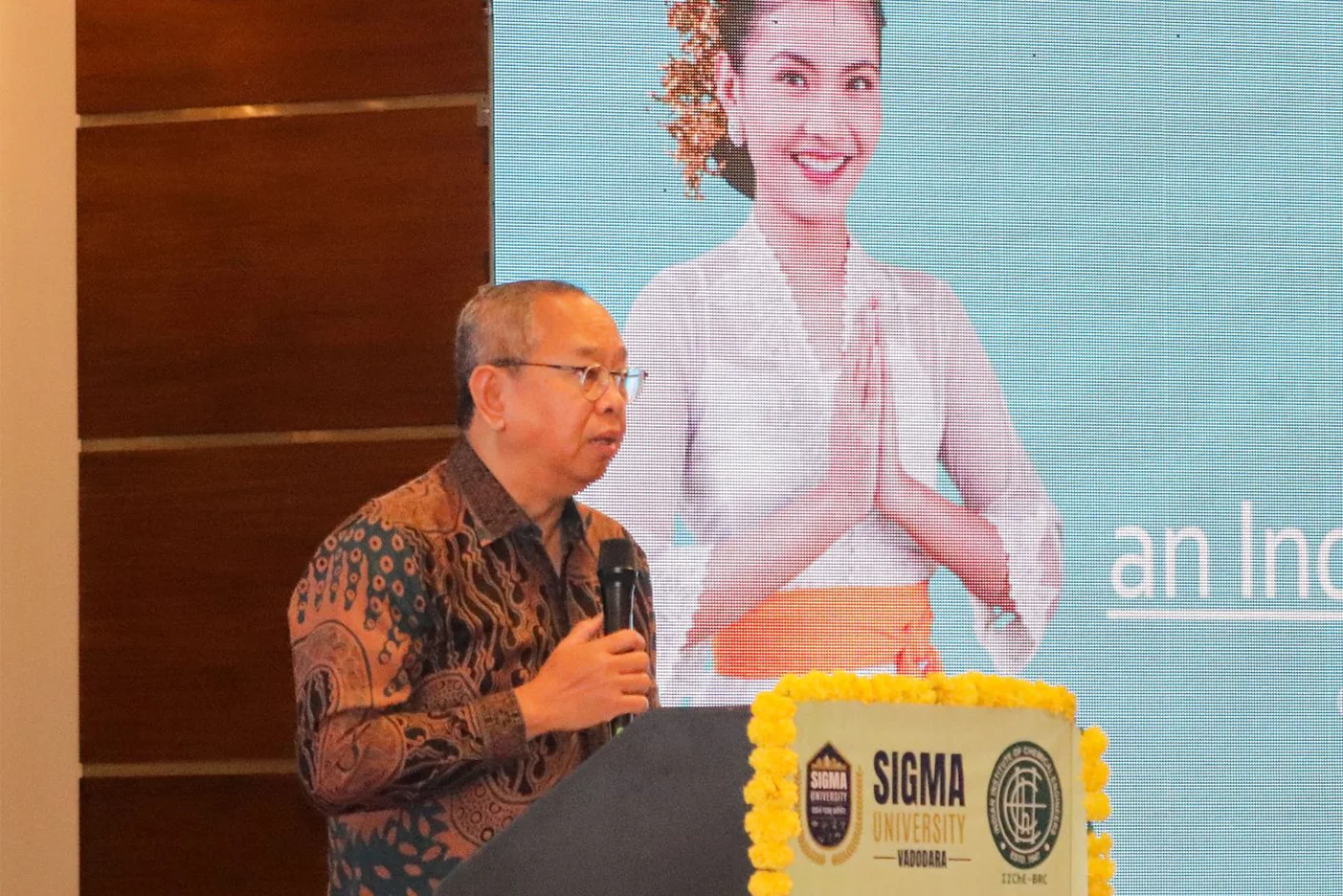
Consulate General, Republic of Indonesia,
Blogs

Tips to Crack a Technical Interview: DSA Questions Asked by Top Companies

CA vs MBA: Career Growth Comparison for Commerce Students
Time Management Tips for Engineering Students: Balancing Studies & Skills
How to Compare Private Universities in India?
What Is University Accreditation? Why It Matters When Choosing a University

Know About the Best Colleges in Gujarat for Computer Engineering

B.Tech Mechanical Engineering: Core Companies vs IT Companies for Career
