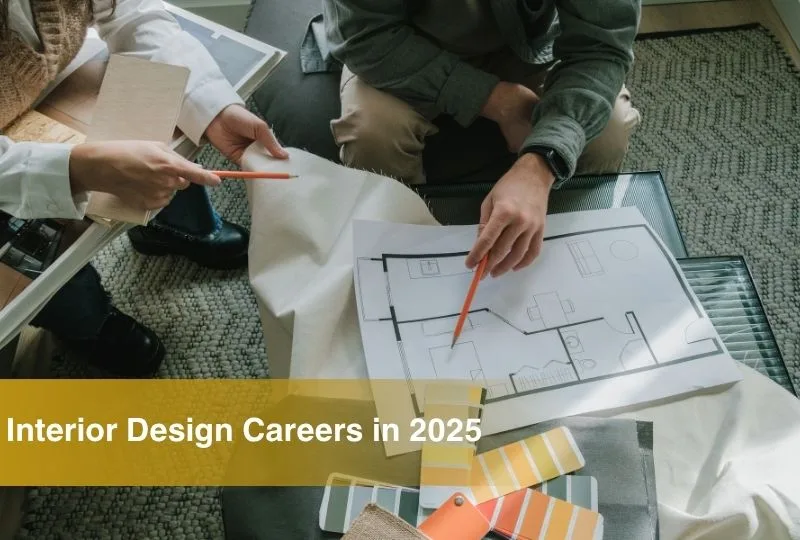
Career opportunities for interior designers in India span residential, commercial, hospitality, government and freelance work. Real estate growth and smart city projects are driving demand. Diploma and degree holders can start as junior designers or CAD specialists. Skilled professionals earn ₹3-15 LPA depending on experience, specialisation and city.
Key takeaways:
- Entry-level designers typically earn ₹3-5 LPA, rising to ₹10-15 LPA with experience.
- Residential, commercial, government and freelance paths all offer genuine career opportunities for interior designers.
- In-demand software skills include AutoCAD, SketchUp, 3ds Max and Revit.
- International demand is growing across the GCC, Europe, Canada and Australia.
The Rising Scope of Interior Design in India
India’s interior design industry is growing fast. Rising demand for modern homes, sustainable workspaces and creative commercial interiors is reshaping the profession every year.
Evolving lifestyles and design trends are expanding career opportunities in interior design across the country. The industry increasingly offers roles across residential, commercial, hospitality, retail and sustainable design, not just traditional home decor.
Students and professionals exploring career opportunities for interior designers will find work in residential projects, commercial fit-outs and hospitality interiors. Retail spaces and government infrastructure add further options.
Why Choose a Career in Interior Designing After Graduation?
Pursuing a career in interior design after graduation gives you real, paid-work-ready skills fast. Here’s why so many graduates choose this path.
- Creative expression. You turn blank spaces into functional, beautiful environments, a rare mix of art and problem-solving.
- Career growth. Junior designers can move into senior roles, project leads or studio owners within a few years.
- Job stability. Real estate, hospitality and retail sectors need designers consistently, not just during boom years.
- Entrepreneurship. Freelancing and studio ownership become realistic once you’ve built a portfolio and client base.
- Global opportunities. Indian designers increasingly work on projects across the GCC and Europe.
- Industry demand. Urban expansion and rising incomes keep interior design career opportunities growing year on year.
Top Career Opportunities for Interior Designers in India
As design needs evolve, new career opportunities for interior designers keep emerging. These roles go beyond traditional residential work, spanning sustainable design, government infrastructure and international collaborations. Here’s where demand is strongest right now.
Residential Interior Design Careers
Residential design remains one of the strongest career paths in interior design, driven by urban housing projects and lifestyle-driven interiors. Designers can specialise in apartments, villas, luxury homes, modular kitchens and renovation projects. Compared with commercial work, residential design and interior decorating jobs focus more on personal lifestyles and customised aesthetics.
Commercial & Corporate Interior Design
India’s rapid expansion of offices, malls and hotels is fuelling demand for career opportunities for interior designers in commercial spaces. Designers are needed for office layouts, retail showrooms, hospitality interiors, healthcare facilities and co-working spaces. Large-scale projects highlight the lucrative scope of commercial interior design in India.
Sustainable & Green Interior Design Careers
Eco-friendly spaces are at the heart of current interior design trends in India. A career in sustainable and green interior design involves energy-efficient layouts, natural materials, green building certifications and environmentally responsible practices. Rising awareness about climate change keeps this field growing fast.
Interior Design in Architecture Firms
Another promising path is an interior design career within architecture firms. Many firms need designers for space planning, furniture layouts and material selections that complement building projects. These roles offer stability and exposure to large construction projects.
Freelance & Entrepreneurial Interior Design Careers
For those seeking independence, freelancing offers flexibility and real earning potential. Many designers start with small residential projects, then reinvest early income into setting up a proper studio.
Online consultations have opened up client bases well beyond a designer’s home city. A strong digital portfolio and an active social media presence both help. So does consistent client acquisition, through referrals and contractor collaborations, growing a freelance practice into a full entrepreneurial venture.
Government Job Opportunities for Interior Designers in India
Students often overlook government job opportunities for interior designers in India. Roles exist in smart city projects, urban development, public infrastructure, museums and heritage restoration. Government bodies increasingly value design expertise for public projects, offering long-term career stability.
Specialised Career Paths in Interior Design
The field is broad, and specialising lets designers stand out in competitive markets. Here are the specialised career paths in interior design worth considering.
- Furniture design. Creating custom pieces for homes, offices and hospitality projects.
- Lighting design. Shaping mood and function through lighting schemes for interiors.
- Exhibition design. Designing spaces for trade shows, museums and temporary installations.
- Set design. Building interiors for film, television and media productions.
- Hospitality design. Designing hotels, resorts and restaurant interiors that shape guest experience.
- Healthcare design. Creating functional, calming interiors for hospitals and clinics.
- Kitchen and bath design. Specialising in high-detail, high-demand residential spaces.
- Retail design. Designing stores and showrooms that drive footfall and sales.
Skills Required for a Successful Interior Design Career
Software skills open doors early. That’s especially true for students on an [INTERNAL LINK: interior design programme → Sigma University interior design programme page]. But skills are only part of the picture.
- AutoCAD. The industry standard for technical drawings and floor plans.
- SketchUp. Fast 3D modelling for concept development and client presentations.
- 3ds Max. Advanced rendering for photorealistic visualisations.
- Revit. Building Information Modelling software, increasingly required on larger commercial projects.
- Photoshop. Editing renders, building mood boards and finishing presentation material.
- Creativity and spatial awareness. The core skill no software can replace.
- Communication. Translating a client’s vague ideas into a workable design brief.
- Project management. Keeping budgets, timelines and contractors on track.
- Budgeting. Estimating costs accurately and sourcing materials within a client’s range.
- Client handling. Managing expectations and feedback across a project’s lifecycle.
Revit and BIM workflows are becoming standard on larger commercial projects. Autodesk’s own BIM overview explains why firms are standardising on it.
Interior Design Trends in India
Understanding current interior design trends is essential for career readiness, and interior design opportunities keep shifting toward tech-enabled workflows. Key trends include AI-powered design tools, smart-home integration, sustainable décor and biophilic design. VR and 3D visualisation are also reshaping client presentations.
Clients increasingly expect a rendered walkthrough before signing off on a project. Designers who pair strong aesthetics with these tools tend to move into senior roles faster. This shapes both career growth and skill demand across the industry.
Career Growth & Salary Outlook for Interior Designers
Interior design salaries in India are rising as demand grows across cities. Entry-level designers typically earn ₹3-5 LPA, while experienced professionals can command ₹10-15 LPA or more.
Salaries vary by specialisation too. Designers with strong software skills often earn above average. So do those with a niche like healthcare or hospitality design. Metro cities generally offer higher starting packages than smaller towns. More large-scale commercial and hospitality projects are based there.
Freelancing adds another layer of earning potential. Designers who build a strong client base and reputation can often out-earn a comparable salaried role. Income becomes less predictable month to month, though. International projects, particularly in the GCC, add a further boost to career growth in interior design.
Interior Design Jobs & Career Opportunities After Diploma or Degree
Students weighing an interior design course and job opportunities together often ask the same question: diploma or degree? Both paths lead to similar entry-level roles as junior designers, CAD specialists or project assistants. With experience, graduates move into senior roles, studio management or entrepreneurship.
Diploma and degree paths differ in depth, timeline and starting responsibility.
| Path | Duration | Typical Entry Role | Best For |
|---|---|---|---|
| Diploma | 1-2 years | Junior Designer, CAD Assistant | Faster entry into practical roles |
| Degree | 3-4 years | Design Associate, Project Coordinator | Deeper theory, stronger long-term progression |
A diploma gets you into paid work faster. A degree tends to open doors to larger firms and quicker progression into senior roles later on. Internships during either path matter more than the certificate itself. Most firms hire fresher interior designers on portfolio strength and internship experience, not qualification alone.
Interior Design Scope in India and Abroad
The interior design scope in India and abroad continues to expand. India offers strong opportunities in real estate and commercial development, from metro cities to fast-growing tier-2 markets.
Abroad, demand is rising across the GCC, particularly the UAE and Saudi Arabia. Parts of Europe, Canada and Australia are opening up too. International employers value designers skilled in sustainability, modular design and cross-cultural styles that adapt to different markets.
How to Choose the Right Career Path in Interior Design
Choosing the right path depends on your interests, skills and long-term goals, not just what pays best right now.
If you love pure creativity and sustainability, green design or residential work might suit you best. If you’re drawn to business and independence, freelancing or studio ownership could fit better.
Students interested in structure and stability often do well in commercial or government roles. Whichever direction you choose, align your skills with genuine career opportunities for interior designers. Chasing trends alone won’t drive long-term growth.
Portfolio & Internship Tips for Interior Design Students
A strong portfolio often matters more than your final grade when firms are hiring. Here’s what actually moves the needle.
- Build a varied portfolio. Include residential, commercial and at least one conceptual or personal project.
- Take internships seriously. Interior design internships teach client handling and software skills faster than classroom work. Many firms look for an internship for a fresher interior designer before hiring full-time.
- Learn core software early. AutoCAD and SketchUp proficiency before graduation puts you ahead of most fresher applicants.
- Network deliberately. Attend industry events, follow design studios, and reach out directly rather than waiting for opportunities to appear.
- Document everything. Photograph and write up every project, even small ones, for future portfolio use.
Conclusion: Interior Design Career Scope
Interior design is no longer limited to decorating homes. It now spans government planning, sustainability, technology-driven design and international projects.
Career opportunities for interior designers in India span residential, commercial, hospitality, government and freelance work. Each path has a different pace and reward. The right specialisation depends on your interests as much as the market.
Sigma University offers practical, industry-linked training that prepares students for these career opportunities for interior designers. That means foundational design software plus real client exposure through internships.
Explore the Interior Design programme and see how the curriculum builds toward these roles.
FAQ
Yes, government job opportunities exist in urban planning, heritage conservation and public infrastructure. Interior designers are increasingly hired for city beautification and state development projects across India.
Build a strong portfolio, use social media for client outreach, and collaborate with contractors. Starting small with residential projects lets freelancers grow their practice independently.
Diploma holders can work as junior designers, CAD operators or design assistants. These entry-level jobs provide practical industry exposure and open pathways for growth with experience.
Future interior designers need CAD proficiency, 3D modelling, sustainable design knowledge and project management skills. Creativity, client communication and material expertise also remain crucial for industry success.
Yes, VR, AR and 3D modelling are creating new opportunities for interior designers. Designers skilled in these technologies can deliver immersive experiences for clients and improve visualisation.
Yes, architects can transition into interior design. Their technical expertise in structures and materials provides a strong foundation for specialising in space aesthetics and functionality.
Yes, skilled designers with international portfolios and knowledge of global design trends can find opportunities abroad. Countries with booming real estate sectors often hire Indian interior designers.
A master’s degree enhances specialisation, research skills and global exposure. While not mandatory, it’s highly beneficial for leadership roles, teaching and international career growth.
Entry-level interior designers in India typically earn ₹3-5 LPA, rising to ₹10-15 LPA with experience and specialisation. Freelancers and those on international projects can earn significantly more, though income varies month to month.
Commercial and hospitality design currently offer the strongest career scope, driven by India’s expanding retail, office and hotel sectors. Sustainable and healthcare design are also growing fast as demand for specialised expertise increases.
Index
- The Rising Scope of Interior Design in India
- Why Choose a Career in Interior Designing After Graduation?
- Top Career Opportunities for Interior Designers in India
- Specialised Career Paths in Interior Design
- Skills Required for a Successful Interior Design Career
- Interior Design Trends in India
- Career Growth & Salary Outlook for Interior Designers
- Interior Design Jobs & Career Opportunities After Diploma or Degree
- Interior Design Scope in India and Abroad
- How to Choose the Right Career Path in Interior Design
- Portfolio & Internship Tips for Interior Design Students
- Conclusion
- FAQ
Most Popular